Showing posts with label Iraq. Show all posts

Thursday, January 05, 2012

What happened to Jessica Lynch's Story?

Media Myth Alert has an interesting foot note to the first days of the Iraq War.


. . .The claim that the military made up the tale of her battlefield heroics is seriously misstated. And more than faintly ironic, given that it was the Washington Post that reported Lynch had “gone down firing,” that she had fought ferociously in the ambush of her unit, the 507th Maintenance Company, in southern Iraq in March 2003.
It was the Post — citing otherwise anonymous “U.S. officials” — that claimed Lynch had “shot several enemy soldiers” in the ambush.


Snip

It was stunning detail, but none of it was true.
Lynch never fired a shot at Nasiriyah. She suffered severe injuries not from gunfire, but from the crash of the Humvee in which she tried to flee the ambush.

The Aftermath interview made no mention of the account offered by Vernon Loeb, a reporter who shared a byline on the hero-warrior story about Lynch. Loeb, in an interview with NPR’s Fresh Air program late in late 2003, made clear the Pentagon was not the source for the erroneous story about Lynch.

In the Fresh Air interview–which I cite in Getting It Wrong, my new book debunking prominent media-driven myths–Loeb said of U.S. military officials:
“They wouldn’t say anything about Jessica Lynch.”
He added:
“I just didn’t see the Pentagon trying to create a hero where there was none. I mean …they never showed any interest in doing that, to me.”


The initial stories struck me as full of BS implausible, but there was not enough information to say what part was implausible.

Saturday, May 07, 2011

Carriers in the West Pacific.

Strategy Page has several informative articles on Chinese naval power, and the implications are signifcant.


Shi Lang Headed For Service

Artists conception of the Shi-Lang from Strategy PageApril 29, 2011: All indicators are that the new Chinese aircraft carrier, the Shi Lang (formerly Varyag) will go to sea before the end of the year, after nearly nine years of reconstruction and upgrades. Defensive weapons, and more electronics, are being installed now, and major internal work appears to have been completed. snip The Shi Lang/Varyag is one of the Kuznetsov class carriers that Russia began building in the 1980s. - snip - The 323 meter (thousand foot) long ship normally carries a dozen navalized Su-27s (called Su-33s), 14 Ka-27PL anti-submarine helicopters, two electronic warfare helicopters and two search and rescue helicopters. But the ship was meant to regularly carry 36 Su-33s and sixteen helicopters. The ship carries 2,500 tons of aviation fuel, allowing it to generate 500-1,000 aircraft and helicopter sorties. Crew size is 2,500 (or 3,000 with a full aircraft load.) Only two ships of this class exist; the original Kuznetsov, which is in Russian service, and the Varyag.

While this carrier is not of the same class as the American Attack Carriers it will outclass every other navy in the West Pacific, and with first class aircraft could give the US Navy a good fight, especially a task force that was not covered by carriers or land based aircraft. It is certainly a sign of a navy that is growing in from costal defense force to contesting for Admiral Mahan’s control of the seas.

Of course Aircraft Carriers need aircraft.


Chinese Carrier Fighter Shows Its Colors

Chinese J-11 from strategy PageApril 28, 2011: New photos of the Chinese naval fighter, the navalized version of the J-11 (an illegal clone of the Russian Su-27), have appeared. This one is painted in Chinese Navy colors, and appears to be equipped with Chinese made electronics. This all grew out of China obtaining one of the Russian navalized Su-27s (the Su-33) from Ukraine, and taking tech (like the folding wings and beefed up landing gear) from it to navalize their 30 ton J-11 as the J-11BH (formerly the J-15). - snip - The Shi Lang is expected to serve as a training carrier, to prepare naval aviators for service on the two new carriers under construction.

Depending on electronics this is probally not be in the same league as the Navy’s current F-18 and definitely not up to the F-22/F-35 class, but shows that in the relatively near future the Chinese will be building top class military aircraft. The F-22 and F-35 are now the goal for designers to meet and beat, in time the Chinese will have planes that can outdo even the F-18 and compete with the F-22/F-35.


The Second Artillery Corps Versus the USN

April 27, 2011: The Chinese Second Artillery Corps, spread over several provinces, has been expanding over the last few years. This includes adding two brigades apparently armed with the long rumored Chinese anti-ship ballistic missile, the DF-21D. This gives the Second Artillery Corps ten DF-21 brigades, plus brigades with several other types of missiles. snip The DF-21D is mainly intended for use against the USN (U.S. Navy), particularly the aircraft carriers. - snip - While the 500-2,000 kg (.5-2 ton) warhead usually contains a nuclear weapon, it is believed that China also has a conventional warhead. - snip - For example, two years ago, China launched another "remote sensing" satellite, joining two others in a similar orbit. These three birds are moving in formation, at an altitude of 600 kilometers, across the Pacific. Equipped with either radar (SAR, or synthetic aperture radar) or digital cameras, these three birds can scan the ocean for ships, even though the Chinese say their purpose is purely scientific. A typical SAR can produce photo quality images at different resolutions. At medium resolution (3 meters) the radar covers an area 40x40 kilometers. Low resolution (20 meters) covers 100x100 kilometers. This three satellite Chinese posse looks suspiciously like a military ocean surveillance system. This is the missing link for the rumored Chinese ballistic missile system for attacking American aircraft carriers.

Since the end of WWII, coast artillery has not been a concern of the US defense planning, after all there was no navy or combination of navies that could get past the US fleet. In the old communist block that was not the case, defending against the US Navy was a serious problem. The anti-shipping missile that is pretty much ubiquitous now, was first a Russian coast defense weapon. Working with Chinese Navy this modern Coast Artillry could force the US Navy to stand off a good distance from the Chinese coast hampering any effort to support the Philippines, Taiwan, Korea, or Japan.


Analysis

Whe viewing Chinese defense efforts we should not take a solely Amercentic view point. Look at the problem for the Chinese view.

- For decades the Chinese military was hobbled by political direction that was time locked in Mao’s long march. In the last twenty to thirty years China has made a number of improvements that could be described simply as building a self-respecting 21st century force.

- Every country on it’s border is potentially hostile, or a buffer between it and a potentially hostile country. This creates a requirment for a defense force of healthy quality and size.

- With the expansion of it’s industry it is importing a massive amount of oil from the Middle East. The protection of the vital shipping route seems to be a focus of Chinese naval policy. In addition to passing near poteintialy unstable or hostile countries in South East Asia it must cross the Indian Lake Ocean. The Indian Navy is making similar upgrades and is an equivalent force - it is also one of the potentially hostile countries that borders China.

Of course, even though weapons developed for one purpose does not mean they can’t be used for another, the military situation in the Western Pacific is changing.


While much of the US defense and intelligence diplomatic interest thought and planning is bogged down in the sands of the Middle East and worried about new and improved counter insurgency warfare, this appears to be “preparing for the last war.” There are more serious problems that can not be forgotten about.


The days when when the High seas were an Amercan Lake are vanishing. A lot of people in Washington in both parties need to wake up.


See also:

How Not to Fix the Military
Book Review: Echof Battle

Sunday, January 02, 2011

Peace Has Broken Out!

Well not quite yet. Strategy Page has posted one of their periodic War Updates A Perspective on the on all the world's wars going into the new year.

Worldwide violence continues to decline, but most people are unaware of this because the mass media will feature whatever wars and disorder they can find. This is an old journalistic technique, and it's good for business. But not so helpful if you are trying to keep track of what's really happening out there. Oddly enough, the most bloody conflicts (like Congo) get the least media coverage. Reporting tends to be distorted by how accessible wars are, as well as how easily your viewers could identify with the combatants. The media also has a hard time keeping score. For years, Iraq was portrayed as a disaster until, suddenly, the enemy was crushed and the war was won. Even that was not considered exciting enough to warrant much attention, and that story is still poorly covered. Same pattern is playing out in Afghanistan, where the defeats of the Taliban, and triumph of the drug gangs, go unreported or distorted. If you step back and take a look at all the wars going on, a more accurate picture emerges.

snip

All this continues a trend that began when the Cold War ended, and the Soviet Union no longer subsidized terrorist and rebel groups everywhere. The current wars are basically uprisings against police states or feudal societies, which are seen as out-of-step with the modern world. Many are led by radicals preaching failed dogmas (Islamic conservatism, Maoism), that still resonate among people who don't know about the dismal track records of these creeds. Iran has picked up some of the lost Soviet terrorist support effort. That keeps Hezbollah, Hamas, and a few smaller groups going, and that's it. Terrorists in general miss the Soviets, who really knew how to treat bad boys right.

They then have a country by country review. I will copy the two in which we currently have the most interest. The links by each country go to SP’s archive for that conflict.

Afghanistan

The headlines in the media are all about a stronger and more widespread Taliban, but it's the Taliban who are increasingly getting hammered. There hasn't been a "Taliban Spring Offensive" for the last three years, and the key Taliban financial resource; heroin in Helmand and Kandahar provinces, has been under heavy attack for the last year. The opium crop declined 25 percent this year, and drug gang income even more. The Taliban expected drug gang profits, al Qaeda assistance, and Pakistani reinforcements to turn the tide. But al Qaeda is a very junior, and unpopular, partner, and the Pakistani Taliban are sending refugees, not reinforcements. With all that, violence nationwide was up, mainly because there are more foreign troops in the country, being more aggressive against the Taliban and drug gangs. Foreign troops lost 295 dead in combat during 2008, and that increased 76 percent, to 519, in 2009. That's about half the casualty rate for foreign troops in Iraq during the peak year of 2007. Foreign troops lost 711 dead this year (a 37 percent increase), the casualty rate running at about the same rate of last year because there were more foreign troops in action this year. The Taliban roadside bomb weapon is losing its punch because of more MRAPs, and specialized intel and engineer troops moved in from Iraq. This has not helped civilians, who suffer far more deaths from Taliban action. In fact, independent minded tribes, warlords, corruption and drug gangs remain a greater threat to peace, prosperity and true national unity, than the Taliban (on both sides of the Pakistan border). The "Taliban" are not an organization, but a Pushtun movement that is active on both sides of the border, among less than ten percent of the 40 million Pushtun in the region. The Pakistani government finally agreed to take on the pro-Taliban tribes and various Islamic terrorist organizations. That has put pressure on Taliban on either side of the border. There is no longer a safe haven for the Taliban. Violence inside Afghanistan is growing, largely because of the drug gangs, and their support for tribes (especially pro-Taliban ones) that oppose the corrupt national government. The foreign nations, fighting their war on terror in Afghanistan, have finally realized that there has never been an Afghan national government that was not corrupt, and changing that is going to be more difficult than fighting the Taliban or finding bin Laden. NATO is now fully aware of the trans-national nature of the Pushtun tribes and the Taliban movement. The "war in Afghanistan" is more of a "Pushtun Tribal Rebellion," and is being handled as such.


Snip

Iraq

Islamic terrorists are now a police problem. U.S. troops have withdrawn to suburban bases, and casualties are sharply down. U.S. deaths declined from 314 in 2008 to 150 in 2009, and 60 in 2010. This is way down from the 2007 peak of 904 (when there were three times as many U.S. troops around). Violence in general continues to be down over 80 percent from the bad old days of three years ago. More areas of the country are now at peace (as some have been since 2003.) The Sunni Arab minority has worked out peace deals with the majority Kurds and Shia Arabs. But some Sunni Arab Islamic radicals are still active, supported by Sunni Arab nationalists in the Persian Gulf, and former Saddam supporters in Syria. Some Sunni Arabs, who had fled the country, are returning, but nearly half the Sunni Arabs are still gone (either outside the country or hiding inside Iraq). The Shia militias have been defeated as well, mainly by Iraqi police and troops. Corruption and inept government are now the major problems, with potential Iranian meddling (or even invasion) a permanent threat. The major U.S. TV news operations have pulled out. The war is over.
(bold text is mine)

Let us hope the trend continues.


Related: Democracy and Peace in a Unipolar World

NOTE: I have a love/hate relationship with this site. I don’t like their sourcing policy - they don’t - but if you want to you can usually find it with a quick google search, they have a tendency toward terminal curtness in titles style etc. but that is probably good marking. On the other hand they cover in a single place, in an easy format, items that would be impossible to keep up with otherwise, and there meta -analysis’ are usually among the most plausible and they do not spin their analysis to support agendas or either side in domestic politics. This type of article is SP at it’s best.

Tuesday, December 15, 2009

Afganistan:Looking at the Surge

Now that President Obama has make His decision to surge* in Afganistan, it is a good time to look at what we can expect. Our forces and those of are allies are streched thin with little in country reserves. It seems there will be a major Taliban offensive come spring, if they don't launch one we will. The surge should provide the troops to deal with it, and counter attack. Personally I think 30,000 (four maybe five regimental/brigade combat teams with support troops) is to few but that is as much as will be available to move by spring. More will certainly need to follow especially to take advantage of what develops by summer. The enemy has no way to develop his actions to Mao Zetung’s mobile phase where they could win a purely military victory. Without doing that they will lose unless the we get tired or lose patience and withdraw. They will try to deny us access to the civilian population and ware down our will to fight and hope they can cause enough hurt that the President will cut his losses in August 2011. The fighting will be in Afghanistan the real war will be in for the hearts and minds of the American political establishment.
[* I do not really like using the word "surge" here. The surge in Iraq was in response to a specific operational situation, Afganistan is a very different and less tractable opertional situation. THis could produce false expectations.]


Some good articles on what to expect.

From General Crystal’s assessment supporting the request for 40,000 additional troops.

The situation in Afghanistan is serious; neither success nor failure can be taken for granted. Although considerable effort and sacrifice have resulted in some progress, many indicators suggest the overall situation is deteriorating. We face not only a resilient and growing insurgency; there is also a crisis of confidence among Afghans -- in both their government and the international community - that undermines our credibility and emboldens the insurgents. Further, a perception that our resolve is uncertain makes Afghans reluctant to align with us against the insurgents.
Success is achievable, but it will not be attained simply by trying harder or "doubling down" on the previous strategy. Additional resources are required, but focusing on force or resource requirements misses the point entirely. The key take away from this assessment is the urgent need for a significant change to our strategy and the way that we think and operate.


snip

This is a different kind of fight. We must conduct classic counterinsurgency operations in an environment that is uniquely complex. Three regional insurgencies have intersected with a dynamic blend of local power struggles in a country damaged by 30 years of conflict. This makes for a situation that defies simple solutions or quick fixes. Success demands a comprehensive counterinsurgency (COIN) campaign.
Our strategy cannot be focused on seizing terrain or destroying insurgent forces; our objective must be the population. In the struggle to gain the support ofthe people, every action we take must enable this effort. The population also represents a powerful actor that can and must be leveraged in this complex system. Gaining their support will require a better understanding of the people's choices and needs. However, progress is hindered by the dual threat of a resilient insurgency and a crisis of confidence in the government and the international coalition. To win their support, we must protect the people from both of these threats.


Strategy Page is gives it’s description of the plan approved by President Obama.

American commanders believe the 30,000 additional U.S. troops, plus increases in Afghan and NATO forces, will enable the Taliban to be crushed within a year. But after that, Afghanistan will require economic and military assistance for at least twenty years, to bring sustained peace to the country. The plan is to turn over security to the central government within five years. Initially, through the middle of next year, there will be more violence. The Taliban and drug gangs will not go gently into the night. They will resist energetically, many choosing to fight to the death.

It continues with a background and assessment.


Michael Yon describes what he thinks will be one of the critical battles around Kandahar. I think this is good assessment of the opertaional problems, what will happen and what needs to be made to happen.

People are confused about the war. The situation is difficult to resolve even for those who are here. For most of us, the conflict remains out of focus, lacking reference of almost any sort.

Thus he begins an overview of the strategic/operational situation in Afghanistan. I doubt you will find a better analysis.

The most we can do is pay attention, study hard, and try to bring something into focus that is always rolling, yawing, and seemingly changing course randomly, in more dimensions than even astronauts must consider. All while gauging dozens of factors, such as Afghan Opinion, Coalition Will, Enemy Will and Capacity, Resources, Regional Actors (and, of course, the Thoroughly Unexpected). Nobody will ever understand all these dynamic factors and track them at once and through time. That’s the bad news.

The good news is that a tiger doesn’t need to completely understand the jungle to survive, navigate, and then dominate. It is not necessary to know every anthropological and historical nuance of the people here. If that were the case, our Coalition of over forty nations would not exist. More important is to realize that they are humans like us. They get hungry, happy, sad, and angry; they make friends and enemies (to the Nth degree); they are neither supermen nor vermin. They’re just people.


Snip

President Obama and NATO will plan to send tens of thousands more troops. The big fight shaping up will likely unfold in the south, in places like Helmand, Kandahar, and to a much lesser extent, Zabul, and also in other eastern provinces. We could use far more troops, and so other places will be left to fester, but the surge and change of course might be enough to turn the war around. We will find out.

Russians say we repeat their mistakes but they are wrong. The Soviets employed true scorched-earth tactics—the same tactics that many armchair commanders at home would like to employ. Every time the Soviets whacked the Afghan hive, more hornets raged out. Soviets bullied their way around places like Hungary and Czechoslovakia, and were fantastically brutal in Afghanistan, using all the fire they could breathe. Their “Rules of Engagement,” if any, were probably more concerned with conserving ammunition. They tortured.

Soviet abuses enflamed the population and combat ranged from north to south—with much occurring in Kandahar Province, the capital of which is Kandahar City. The Soviets fought in places like Bamian, where today Americans can literally go on vacation. The Lithuanian Ambassador to Afghanistan told me he took some holidays in Bamian and loved it. Last year, I drove about a thousand miles from Jalalabad to Kabul to Mazar-i-Sharif and back, and other places, with no problems and no soldiers. Most of the country is not at war. Much of this is a result of our strict “Rules of Engagement” (ROE) which seems to be driving people crazy at home (and many soldiers, too). Many soldiers hate these new ROE, and there is little doubt that we will lose troops due to restrictive ROE. My own thoughts are of little relevance.


He describes the Green zone, the river valleys that have vegetation compared to the vast surrounding desert. This is where the people live and is what must be controlled.

The Green Zone to the right [in his Earth Google shot] is caused by the Arghandab River, just next to Kandahar. The Taliban want Kandahar and are in a good position to get it. The year 2010 likely will mark a true Battle for Kandahar, though it probably will not be punctuated by the sort of pitched battles we saw in places like Mosul and Baghdad. This remains unknown.

Armies from at least three countries have ventured into the Arghandab River Valley: British, followed by Soviets, and more recently Canadians; all were unsuccessful.


Snip

Since the 2001 invasion, U.S. soldiers have come and gone from the Arghandab, but we’ve never had enough soldiers to sit still. More recently, the Canadians made jabs at Arghandab but did not get far. Some people believe the Canadians have been militarily defeated in their battlespace. No US officer has told me that the Canadians have been defeated, and none have denied it. There is no doubt that Canadian troops earned much respect, and that more than 130 paid the ultimate price.

On current course, Canada will have fully retreated by 2011. This is crucial: the enemy realizes that our greatest weakness is Coalition cohesion and they have defeated what was an important partner.

Now it’s mostly down to the U.S. and Afghan forces to saddle Arghandab, or lose Kandahar
and if Kandahar probably the war.

A sobering analysis. On the positive side with enough troops and time a positive engagement strategy winning is possible. On the negative side lack of resources, impatience, or allowing frustration and anger to develop into excessive force, can bring defeat.

Read the whole article. I think it will provide a good filter to to view news reports of military action over the next year or so.
HT: Instapundit


For a lower level look at what the battle will be like see his report on embedding with the 2d Battalion of the British Rifle Regiment which seems to be too small of a unit for it’s mission.


Another key part of the battle will be carrying the war to the enemy which will mostly be Special Operations action. The London Telegraph gives a sanitized summary of what will happen.

It will be a tough year.

See also

Maothought or Who is Winning

Obama Says Bomb ’em
Les Solidat Americain dan Afganistan
East Meets West - President Obama in the Middle East
Mr President - Make a Decision
It's Now Obama's War

All my Afganistan posts.

Saturday, June 06, 2009

East meets West: President Obama in the Middle East


The Ballad of East and West by Rudyard Kipling (background The article is a little long the key part is last quarter of the article.)


Oh, East is East, and West is West, and never the twain shall meet,
Till Earth and Sky stand presently at God's great Judgment Seat;
But there is neither East nor West, Border, nor Breed, nor Birth,
When two strong men stand face to face,
tho' they come from the ends of the earth!


While Kipling is often misunderstood to say East and West can never meet, the point of the the stanza and the poem is that when two strong men stand face to face it is possible for them to meet. Near the end of the poem we are told of the British Officer and the Pathan ruler:

They have looked each other between the eyes, and there they found no fault,
They have taken the Oath of the Brother-in-Blood on leavened bread and salt:
They have taken the Oath of the Brother-in-Blood on fire and fresh-cut sod,
On the hilt and the haft of the Khyber knife, and the Wondrous Names of God.


But before the British officer went on his chase into Pathan territory he was warned:

There is rock to the left, and rock to the right, and low lean thorn between,
And ye may hear a breech-bolt snick where never a man is seen.


He is always at the mercy of the Pathan and if he does not pass muster the trigger will be pulled.

-----------------------

President Obama this week made a speech in Cairo to the Moslem world laying out his hopes for peace and cooperation. Well delivered as always. It was what his prime consistencies wanted him to say and what his opponents were afraid he would say. He has told the more or less westernized leadership in the Middle East where he coming from. But the real question is are there Moslem "strong men" in control the guns and bombs and will they see a another "strong man" with whom they can take an Oath of the Brother-in-Blood on leavened bread and salt or will they see an just another American politician and tell their followers to pull the trigger.

Well I hope for the best, but with little confidence.

Tuesday, February 03, 2009

Book Review: The Echo of Battle

“Armies always prepare to fight the last war.” The Army is accused of preparing for the Cold War/World War III and then fighting an insurgency in Iraq. The Army is now as prepared, as it ever will be, to fight the war in Iraq. In two years (or hopefully less) this will be the last war. The Army is again ready to fight the last war –Iraq. But in reality we could end up in any of several types of war, and as the 3d Infantry Division found in Baghdad, the type can change overnight. Since the M-2 Crystal Ball is hopelessly stuck in development, how does the US Army determine what the next war will be like, and prepare for it?

Echo of BattleBook Review: The Echo of Battle: The Army's Way of War
Brian McAllister Linn
Harvard University Press


Brian McAllister Linn’s latest book looks at the question of how the Army thinks about preparing for the next war. He identifies three intellectual traditions in the Army with very different ideas on the nature of war, and what will be needed, and how to prepare for it. During peacetime when they look at past wars they see different things that contributed to success or failure, and advocate different virtues approaches and solutions. The Army’s preparations for the next war are based on the interplay of these traditions. All of them have made major contributions and all of them have been the source of significant problems. Officers of each tradition have been excellent commanders and notable failures. When each tradition listens to the lessons past wars and draws conclusions it is influenced by it’s values, thus it hears only The Echo of Battle it expects.

These different traditions have dominated at different times. These are tendencies; individual officers may have ideas that are from two or even all three schools. No tradition has ever been so suppressed that in need it could not reassert itself. Each will propose it’s own explanations for success and failure. The success or (more often) failure of these traditions to interact with each other and larger events provide the intellectual framework how the Army prepares to fight the next war.


Guardian - Fort Drum, Mainila Bay PIThe Guardian sees war as in exercise of Science.

War can be reduced to a Science and correct action is deduced. Basically an engineering project, apply the right formulas and win. Victories are explained as the result of good doctrine and equipment, a defeat means there was some defect the doctrine or equipment, a reason for more study of the science of war in the future. The political assumptions of the Guardians are that the world is a cruel and brutal place and war could be imposed on us with no notice. It is usually associated with the assumption that US military policy is defensive, offensive action at the national level is not taken except in response to other countries actions or to defend vital national interests. The 19th century Coast Defenses are the classic example of their influance. Small wars are side shows which divert resources. The purpose of the Army is to deter war more than fight a war. This assumes very little diplomatic or political involvement; some one attacks and we defeat them and let the diplomats sort it out later.

At it’s best it places good equipment in the hands of the troops with good tactical/operational doctrine to use it. At it’s worst, when war is not deterred, it does not have a National Military Strategy to implement the doctrine and equipment it provides.


Managers - Normandy LandingsThe Manager sees war as an activity to be Managed.

It sees modern war as the mobilization of societies fielding large armies to win a war for national survival, or a crusade for some great goal. War requires careful planning for the organization and mobilization of society to create a mass army. The use of standardized programs and equipment is the only way to manage these large forces. It tends to de-emphasize human factors. WWII, which was a manager’s war in many respects, is the war where American soldiers started calling themselves GI’s (Government Issue.) The invasion of Northwest Europe in WWII is it's greatest sucess. When a war occurs it dominates all aspects of society. During a war political activity is subordinated to the great goal. Again this assumes very little political or diplomatic involvement and then at the service of the war effort, after the victory the diplomats will work out (dictate) the peace.

At it’s best it enables the deployment of large forces to fight major enemies and ensures that the troops in the field are the best-supplied army in the world. At it’s worst it promotes bureaucratic stagnation, and overlooks the fighting of small wars.


Hero's - Battle of ChippewaThe Hero sees war as a Human endeavor.

People fight wars, thus the traditional military virtues of courage, character, and loyalty are essential to any successful operation. While the Guardians and Managers are engineering and managing for the next war, the Heroes were the line soldiers who fought Indians, pacified the Philippines, chased Poncho Villa, and made the surge in Baghdad. They fought the in front line of all the major wars. They know that a war cannot be considered won if you just win the battle; there has to be a political solution. They also know that without a military victory you cannot get a political solution. They are inclined to value the moral over the material, sometimes to the disregard of modern technology. Their endeavors fall apart for ad hoc design and poor management.

At their best they provide decisive battle leadership and an ability to adapt to whatever they find. At the worst they are the officers in the 1930’s who believed the élan of a cavalry charge could defeat machine guns.


Linn’s concept places a different perspective on debates about preparing for war. Each tradition is not monolithic and can have different viewpoints within it. For example Linn says that the famous Air Corp-Coast Artillery debates were within the Guardian tradition.Debates are often between traditions not old and new, or old and new in a tradition without much reference to others. What may seem to be progressive original “out of the box” thinking may actually be a very conservative exposition of a different tradition.

Of course when a war comes the Army meets a very hardheaded reality, and none of the traditions sees this reality as a whole, thus the Army is often not prepared to fight that war. If the Army is to be prepared to fight the next war, or adapt to the war it finds, rather than what it has prepared for, all three traditions need to be in serious discussion with each other.


Analysis and Opinion
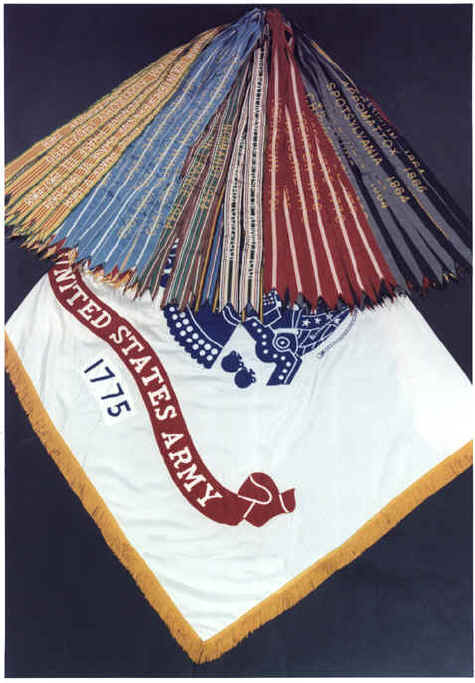
Army ColorsLinn’s concepts bring to mind Russell Weigliey’s The American Way of War a History of the United States Military Strategy and Policy. He builds on Weigliey’s work providing significant new understanding.

Weigliey’s major theme was that when circumstances allow the American Way of War is to seek out and destroy the enemies armed forces and/or ability to wage war. Attrition and indirect strategies are only adopted out of necessity. When the enemies ability to wage war is destroyed the situation is turned over to the politicians and diplomats for a political solution. Both Linn’s Guardian and Manager traditions are different ideas on how to do this. Even the Hero tradition, which sees the need for the political solution sees a military solution as perquisite.

Another of Weigley’s themes was the dichotomy of a Regular Army that thinks it’s mission is to fight European type armies, the most difficult and dangerous opposition, and directs most it’s intellectual effort is how to fight them - but spent most of it’s history as a frontier and later colonial constabulary fighting indians and guerillas, the most common mission. In Linn we see that contrast in greater detail. While their documentary history is not as clear, Linn shows that the Heroes represent a constant intellectual tradition in how to prepare and fight wars, which has made a major contribution to the Army. Weigley writing from the Manager tradition tends to see them as outside the intellectual tradition of the Army.


One thing that struck me was how often the “datum” that was missed by all three traditions in planning for the next war was the future decisions of our political leadership. One of the best examples Linn sites is Lieutenant General John Schofield, then a former General in Chief of the Army saying that “foreign conquest and permanent occupation are not a part of the policy of this country” and just over a year later the US declared war on Spain. Since this was not a policy of the country there was no need to prepare the Army for it. In stating this I think Schofield was not only stating his strong personal and professional values but the prevailing consensus in the country. He would most likely have been pilloried if he had said “foreign conquest and permanent occupation are a part of the policy of this country” To a greater or lesser degree the possible conflicts envisioned by our political leadership, and which the Army was directed to prepare for, were not the ones that developed. But then if the political leadership had envisioned them they may have prevented them.

While Linn limits the topic to the Army’s internal debates, these traditions seem, especially since WWII, to reflect the similar views of the broader defense community and to US perceptions on warfare generally. The traditions exist (and perhaps others) across the Defense Department and broader defense community. Except for breaking discussions into manageable portions I am not sure the Army’s intellectual discussions can be still treated independently of the larger Defense discussion. For example, he sees the Wineberger/Powell Doctrine of fighting only for essential national interests, with popular support, in quick overwhelming decisive campaigns as an expression of the Guardian tradition. But the Rumsfeld “transformation” is also an expression of the Guardian tradition. The difference being the Wineberger/Powell envisioned a key role, in conjunction with the other services, for the Army (a role with which the Army was comfortable, perhaps too comfortable); but Rumsfeld’s vision gave the impression that the eventually the Army would be relegated to base guards and target spotters. This may help explain why the Army did not get along well with Secretary Rumsfeld. I get the impression that pre-9/11 the Army was only a marginal, and perhaps unwelcome, participant in much of the discussions that led to the “transformation” policy. It is not enough that the Army's three traditions are in discussion with each other but they must also be in a serious discussion with their counter parts in the larger Defense community, to ensure the oppertunities and problems of ground combat are taken into account, and the Army receives instructions to prepare for a future war that has a basis in reality.


The Army prior to 9/11 was not prepared to fight the Cold War/World III, as the accusation I began this post claims, it was prepared to execute the Wineberger/Powell doctrine, the last coherent political direction it received. This was useful for “major combat operations" in Iraq: but was not what was needed or the “minor combat operations” that followed. The Runsfeld transformation doctrine weakened the march to Baghdad and except for providing good air support weapons was not much use for fighting the insurgency. Of course an insurgency is a “Hero’s war."


Summary

Solidiers 1775-2007Best quote from the book. Linn quotes General Tommy Franks saying; “I’m a warfighter, not a manager”. In the footnote he comments “Franks is quite correct in his assessment of his managerial abilities”

This is a well written book that should be mandatory reading for Army officers and any one with a strong interest in military policy. For those who would only read two or three books on the subject The Echo of Battle should be one of them. STRONGLY RECCOMENDED,


Brian McAllister Linn is a History professor at Texas A&M University and the author of U.S.Army and Counterinsurgency in the Philippine War 1899-1902, The Philippine War, Guardians of Empire, The U.S. Army in the Pacific 1902-1940 All of which are excellent. The Philippine War is an example of how military history should be written.


See Also

Reviews of Parameter articles.
Military Culture Wars
War Termination


Other
How Not to Fix the Military


N.B. The pictures other than book cover are US governemnt art and in the public domain.


See Also

Carriers in the West Pacific
How Not to Fix the Military

Wednesday, May 21, 2008

The Iraq Situation

It has been five years since the invasion of Iraq. It has been almost a year since my last Iraq specific post. So I suppose it is time to look at the way things are going.

Back in February 2005 in An Event Table Not a Timetable I commented on the many calls for a “Timetable” to withdraw from Iraq:

Some are calling for the Administration to publish a timetable for withdrawal from Iraq. The Administration is politely declining to do so.


And so why not?

Any timetable assumes that specific events will happen before any point on the timetable. If the table is published all those who disagree, especially the insurgents, can plan their activities to ensure that the required events cannot happen on time. Even if militarily insignificant every failure to meet the table is a political and psychological defeat. All guerrilla wars are highly influenced by political and psychological factors. Announcing a timetable is a set up for embarrassment at least.


But doesn’t there have to be some sort of basis for planning?

Well yes, but a published timetable is not it. The proper way is to have a table of the desired events. This would underlie a timetable any way, but if the events move forward or backward, or are out of sequence we are not trapped by an artificial artifact.


And going out on a limb I pointed out one of the big events.

This week’s dead tree version [of the Army Times} carries the headline. “Your ‘Ticket Out of Iraq’ - 15,000 troops whose tours were extended are coming home – How fast can the Iraqi soldiers take over for the rest?” There is a four-page spread on different units and experiences in training Iraqi units. The Iraqi units involved are paired with US units. The message is clear “’get these guys trained!’ so we can come home and stay there.”

So how is this going? The Iraqi troops in the articles were “not up to US Army standards” but getting better. The US trainers had good relationships with the Iraqi’s and were confident in their success. The best overall source is from Global Security here and here. It appears that progress is being made - slowly.


And a quote from General Petraeus I had forgotten about “. . . I want to get the hell out of here."


It is symptomatic of the handling of the Defense Department that sending trainers to train the new Iraqi Army did not happen until close to 18 months after the collapse of the old Iraqi Army and the capture of Baghdad.

I spent most of my military time in training units, staffs and schools. Training an Army from the the ground up is a massive job, during a war is not the ideal time and place, even so it has taken longer than I expected.


In July 2007 I ranted about possibility of a A March UpCountry? included an overview of the situation:

The original insurgency of pro-Saddam Baathists has been effectively defeated since the end of 2005. Of course like all insurgencies some idiots will be throwing bombs for years, but it is really an Iraqi police problem at this point. Al Quida is on the run, its policy of trying to get Iraqi support by killing Iraqis, only got Iraqis mad. They may be more than a strict police problem at this point, but AQ is not likely to overthrow an Iraqi government of any type. Since about the beginning of 2006 a number of armed groups that had been sitting out the original insurrengency decided it was time to use force to get a better bargaining position for the final settlement, maybe even settle old scores, and get rid of some competitors. This is a very different dynamic than previously, which could be analyzed in the framework of standard guerilla warfare. Now we have groups that purport to represent major portions of Iraqi society, though if they weren’t armed and willing to kill people it is doubtful how much support they would have. When commentators in the last year or so have been worried that Iraq was slipping into a civil war they are expressing a concern that these groups may be able to pull whole sections of Iraqi society in to combat with other sections. Some of these groups have better outside forign connections than the Baathists which is why we are seeing more foreign (especially Iranian) weapons and other support than the Baathists received

The role of military action is limited but critical. They have to keep all the non-government factions from getting into a military position where they can dictate their terms, hurt them enough that a peaceful settlement will get them more than they have the ability to take by force. This has to be done without alienating the larger groups the militants claim to represent. Basically this is protecting the Iraqi Governments efforts to reach a peaceful settlement. The war will not be won by a straight military victory in the field, but also it can’t be done without military operations. The war can be lost militarily.


Now the the Long War Journal in [the] Iraqi Army presses into Sadr City tells us that

The Iraqi Army said three of its brigades were involved in the operation, and moved into Sadr City in seven convoys. Six of the nine available battalions from the three brigades were pushed into Sadr City. Between 4,000 and 5,000 Iraqi troops are now operating inside Sadr City.
The US military, including the advisory teams, has not entered the northern areas of Sadr City. "No U.S. troops have gone beyond Quds Street," said Lieutenant Colonel Steven Stover, the chief Public Affairs Officer for Multinational Division Baghdad, in an e-mail to The Long War Journal. "This is an Iraqi planned, led, and executed operation. US soldiers are providing advice, intelligence and enabling support."


This is an operation the size of the attack on Fullajah in November 2004. That the Iraqi's are able to launch it pretty much on their own is compelling evidence of a major training success for the Iraqi Army. It was the failure of a similar Iraqi only operation in December 2005-January 2006 that set the events in place that led to the surge. That operation failed because they did not have enough strength and too many of the units were not up to the opposition they faced. With the success of the Iraqi dominated operation in Basra recently it seems that the Iraqi Army has achieved a decent level of maturity.

The Long War Journal adds:

Sadr and his political movement have become increasingly isolated since the fighting began in Basrah, Baghdad, and the South. The Iraqi government, with the support of the political parties, said the Sadrist political movement would not be able to participate in upcoming provincial elections if it failed to disband the Mahdi Army. On April 13, the cabinet approved legislation that prevents political parties with militias from contesting provincial elections this year. The bill is now in parliament for approval. Grand Ayatollah Ali al Sistani, the top Shiite cleric in Iraq, said the Mahdi Army was not above the law and should be disarmed. Sadr has refused to disband the Mahdi Army.

Militarily, as noted above the original Baathist insurgency is defeated. Al Quida in Iraq is pretty much confined to the Mosul area and fighting to survive. Most of the Sunni groups have sought a separate peace with the Iraqi Government, and the Sadr forces are the last major Shia holdouts.


Some events that are late by any time table that would have been made in 2005, but real none the less.

Since you can click on my links and see how many predictions I got wrong, I’m not going to make any more.


My Iraq topic posts.

Monday, March 31, 2008

How Not to Fix the Military

Fred Kaplan and Phil Carter have published ten recommendations in Slate on "How to Fix the Military". I am not overly impressed. It is the same old tired boilerplate that has been around for years, better at finding problems than analyzing them or recommending good solutions.

I suppose my biggest gripe comes from having been employeed as a systems analyst. They are looking at symptoms announcing generic solutions for the symptoms. Of course when the underlying problem is not addressed fixing the symptom is not effective. One of the reasons these sorts of recommendations often go nowhere is that people recognize they are not likely to be effective even if they do not see the actual problem.

Several of their recommendations are directly related to the Iraq War and being prepared to conduct similar wars in the future. Iraq will soon (all fingers tightly crossed) be the last war. At least they did not include the bromide that the military always prepares to fight the last war. Since the M-2 Crystal ball is stuck in development we have to expect that the next war could be any of several types of war, including one like Iraq. Their proposals seem to be for organizing to fight small insurrections, police actions, and campaigns against second rate powers. While that is a real possibility it is not a certainty and I am not certain that these would be the most likely possibilities or the most dangerous threats to the US.


They recommend overhauling the Budget. A good idea. The budget is Congresses. Most of these problems come from the way the Congress likes to manage the budget, which may or may not be a good way to mange civilian agencies. They consider several ideas that might be good ideas if the Congress will approve them but provide no rational as to why the Congress would consider them a good way to manage defense policy. A lot of the overlapping items they comment on are the type of thing that the Congress likes because ovewrlaping forces agencies to go back to the Congress for resolution. A major improvement here has to start with a commitment by Congress to a different way of doing business.


They say there needs to be a “bottom up” review of the defense budget. This is bad systems analysis. The review should be “top down.” To be fair it sounds like they are calling a “top down” review a “bottom up” review. A real “bottom up” overhaul is just the thing to perpetrate the problems they are commenting on.

A top down solution starts with what do we want/expect/need the military to do to be militarily effective in accomplishing national policy Then for each successive level down analyze against that standard.

A bottom up approach looks at all the neet technology (or what factories are in what congressional districts), that is the bottom, and tries to figure out how to build up from that. This sort of approach produces results that are often described as resembling a bowl of spaghetti. This is the method behind former Secretary Rumsfeld’s “transformation” policies. Realistically any review will contain some of both thus someone will get to republish the boiler plate in a few years. Hopefully we will have enough “top down” to get something that works, and enough “bottom up” to gets the votes in Congress to pass it.


A good example comes from the their discussion of the F-22 fighter.

Our whole military war fightning ability depends on maintaining air superiority. Something the US forces have held since 1943 or 1944, so long that we take it for granted.

The F22 fighter is an air superiority fighter. The current F-15 and the F-22 are what will maintain air superiority against any challenge for the near future. A number of foriegn Air Forces are developing fighters that can compete against the F-15. and the F-22 is the standard against which they are developing new planes. Even if what they develop cannont beat the F-22 it will be able to beat the ageing F-15's. A few years ago the Indian Air force bested F-15’s in war games (admittedly under rules proposed by the Indian Air Force.)

A top down approach asks “How do we maintain air superiority in the short term and long term? Is the F-22 the way to do it?” There is a lot of discussion on the issue by people who know a lot more about the question than I do. I suspect the result will be the F-22 as a mid-term solution because the F-15's are getting too old, and some sort of unmanned aircraft (which should be less expensive) for the long run which can't be developed in time for the mid-term. There are other recommendations that address the problem.

The authors are looking at it from the bottom up, F-22’s are expensive and are not much use in street fighting in Baghdad, which is about as bottom as you can get. They comment that one reason the Air Force likes the F-22 is it provides planes for pilots to fly, which is true, but irrelevant to deciding how to maintain air superiority. But with out control of the air, Baghdad would be a very different battle and a future battle may not be winnable.


They have several suggestions that are related to the military personnel systems. They have some good ideas. Some of there suggestions are platitudes. The military personnel system is a complex interrelated labyrinth. It has good features. It has bad features. In many cases the bad feature is a side product of the good feature. You can’t fix the bad feature without possibly hurting the good feature. The system comes from decisions made starting in the 1920’s and especially after WWII. I think a good look at it is necessary, but a change with a hope to be effective will have to be a root and branch change, not the modest changes they are proposing, and which may only bring a new set of equally difficult problems.


One of the things the next adminsitration will have to do is a major look at long term defense policies and programs. These authors have done better in the past. This is not helpful.


HT: Diodotus of Elected Swineherd who has a recommendation that is always cogent.

Update May 10, 2011
See Also
Carriers in the West Pacific
Book Review: Echof Battle

Saturday, January 19, 2008

Election 2008 Overview

It looks like Clinton will win the Democratic nomination and McCain will win the Republican nomination.


I took the rolling poll tracking data for the for the candidates at Rassmusen Reports and copied them into a spread sheet starting from December First. I averaged the results for each day with an average of the previous ten days. (The entry for the tenth is an average of the first to the tenth, the entry for the eleventh is an average of the second to the eleventh) This smoothes the results eliminating minor day to day variances in public opinion or errors in a particular days samplings. The disadvantage of this method is it is not very sensitive to the last several day’s results. (I am not reproducing the data because Rasmussen will be happy to sell you similar data, more professionally done.) Of course individual primaries and caucuses will not accurately reflect the national average and may be more important in the actual nomination.


On the Democratic side Clinton has been holding at the high thirties nationally. Obama is in the low very high twenties low thirties and Edwards in the Low twenties. These numbers are stable for a month and a half. I suspect she will win the Democratic nomination. The question is how much anti-Clinton sentiment there is in the undecided and Edwards supporters. Normally you would expect them split between Clinton and Obama proportionally, but there is too much Clinton angst to make that a safe bet.

I don’t see much in any of them to vote for. As is often pointed out that the so-called Neo-conservatives are not actual conservatives. They rebelled from the main stream of the left because they saw those policies as morally and intellectually bankrupt. Though their ideas are much better than the main stream left they are not really conservative. Left Wing Lite so to speak. Most of what got President Bush in trouble in Iraq and domestically came from the baggage they brought with them to Bush's coalition. The thought of going from Left Wing Lite to the high calorie version does not seem exciting.

In the 2000 Presidential debates Al Gore said he thought Nation Building was a good policy for the US military. This was reflecting the traditional Wilsonian ideas. Bush disagreed. The US should only use it's armed forces to protect our vital interests. Iraq is basically a Nation Building project, justified by the Bush Administration as response to Nine Eleven. This was the result of the Neocon’s increased influence after Nine Eleven. It may not have been Iraq, but Gore would have had much less inhibition to getting us into similar activities even without Nine Eleven. I see no reason to assume a new Democratic administration would not continue the traditional Democratic military policy.If you thought Iraq was fun - Vote Democratic.


The Republican side is more interesting.

Giuliani, the long time expected Republican nominee is doing a nosedive. Every three or four days since December First he has been losing a percentage point If this continues he will be in negative numbers in late February. None the less the perceptive Anchoress gives him her Endorsement:

It is easy to forget, particularly if you did not live in New York in the months following 9/11, that Rudy Giuliani went to the wakes or funerals of nearly every lost cop and firefighter in the city, sometimes going from one funeral to the next in a single day. He even walked a bride down the aisle, after she’d lost her firefighter father and brother. He was tremendous and authentic, and he showed courage, commitment and leadership.

She is right, he is the best leader in a crisis of all the candidates, but I am not at all sure what direction he will lead in the more normal affairs of government. He is not at all solid on social conservative or fiscal issues, issues that need solid leadership in directions he does not support.


Romney has been climbing slowly to the low twenties and holding. Thompson is steady at ten to twelve percent. I think they have found their level and will not go anywhere, assuming none of the other candidates does something stupid. These would both be reasonable Presidents but I am not sure they are enough of a candidate to win. Romney may be able to position himself with enough recognition that he will be a much better candidate in 2012 or 2016. The more I see of Thompson the more I like him, but at a steady ten to twelve percent he not going anywhere.


Huckabee has been doing a slow gain picking up a net of about fifteen points from a starting point of twelve percent. He has been doing a good job of bringing some very disappointed social conservatives into the process. I think the real question is can he deliver them to whomever is the candidate the Republicans nominate. The Republicans can’t win with out this support. The biggest problem was nicely summed up by Peggy Noonan.

From the mail I have received the past month after criticizing him in this space, I would say his great power, the thing really pushing his supporters, is that they believe that what ails America and threatens its continued existence is not economic collapse or jihad, it is our culture.

They have been bruised and offended by the rigid, almost militant secularism and multiculturalism of the public schools; they reject those schools' squalor, in all senses of the word. They believe in God and family and America. They are populist: They don't admire billionaire CEOs, they admire husbands with two jobs who hold the family together for the sake of the kids; they don't need to see the triumph of supply-side thinking, they want to see that suffering woman down the street get the help she needs.

They believe that Mr. Huckabee, the minister who speaks their language, shares, down to the bone, their anxieties, concerns and beliefs. They fear that the other Republican candidates are caught up in a million smaller issues--taxing, spending, the global economy, Sunnis and Shia--and missing the central issue: again, our culture. They are populists who vote Republican, and as I have read their letters, I have felt nothing but respect.

But there are two problems. One is that while the presidency, as an office, can actually make real changes in the areas of economic and foreign policy, the federal government has a limited ability to change the culture of America. That is something conservatives used to know. Second, I'm sorry to say it is my sense that Mr. Huckabee is not so much leading a movement as riding a wave. One senses he brilliantly discerned and pursued an underserved part of the voting demographic, and went for it.


John McCain was down to the low teens in mid December and has been sky rocketing up ever since. I think this reflects that in addition to his strong base at about his minimum in December, but he also is an acceptable candidate to the undecided and acceptable as a second or third choice of the Republicans who support other candidates and acceptable to independents in the general election. But with that much soft support it is easy to stumble.

El Jefe of the The Kingdom of Chaos calls John McCain the the Most Viable Conservative.

So convince me, people. I'll go with the most viable conservative. McCain's voting record in Congress is in general conservative, and he can win. Show me somebody else who can win. Show me somebody else as persistent. Think on something else: McCain could have been anointed -- walked into this nomination if he wanted -- all he had to do was back-off a bunch of stands that have irritated the Hell out of a lot of us. Okay, most of us on the conversative side of things disagree with his stands. But he made them anyway. He didn't maneuver for advantage, when it was clearly in his interest to do so. He did his duty as he saw it. Show me somebody else, who -- at such great political cost to himself: stands up for what he thinks . . .


Gerald of the The Cafeteria is Closed quotes Gerard V. Bradley of Notre Dame University on McCain’s prolife record. He may actually be stronger on social conservativism in practice than Huckabee.

Of the remaining pro-life Republicans, none can match McCain’s record of opposing abortion. He has served in Congress for 24 years, and cast a lot of votes on abortion legislation during that time. His record is not merely exemplary — it is perfect. McCain’s votes on abortion really could not be better. A campaign advertisement in South Carolina says of John McCain: “Pro-life. Not just recently. Always. Never wavering.” The ad is true....Twenty-four years of service at the national level — almost all of them in the Senate — make a big difference when we are talking about the next President, compared to candidates who have been small-state governors. There is no need to speculate or to rely upon promises or take matters on faith when it comes to McCain and abortion. He has demonstrated himself to be the best pro-life choice.


Identifying the best presidential pro-life candidate is very largely about judges, as well as particular issues. The next president is likely to (no one can say for sure, of course) have a couple of vacancies on the Supreme Court to fill. Given the Court’s present makeup and who is likely to be replaced, these two nominations will either tip the balance against Roe, or confirm it once again for a whole generation. For if the Court revisits the question of Roe’s basic validity in, say, 2010, it will not do so again for a very long time.(The last time was Planned Parenthood v. Casey, in 1992.) McCain’s “model” of a Supreme Court Justice are — he has said — Clarence Thomas and Antonin Scalia.I mentioned a recent South Carolina advertisement about McCain’s pro-life voting record. As good as that record is, the ad contained still more powerful evidence of his pro-life convictions. This part of the ad shows Cindy McCain walking beside a diminutive Catholic nun. Mrs. McCain is holding an infant in her arms. It is (the ad text says) “little Bridget, a baby she and John adopted in 1993 from Mother Teresa’s orphanage in Bangladesh. Bridget has been a great blessing to the McCain family.”


McCain seems to be the best (or least worse) of the candidates. However I am not entirely happy with him. The McCain Finegold Act denies freedom of speech, but nothing like the so called hate speech laws advocated by the Democrats; those parts of the act should be repealed or ruled unconstitutional. His grandstanding on torture with proposed legislation that was so poorly written that it could increase the use of torture was disappointing. (The link is my post.)

He is the best the candidate that’s running, but I think I will keep my old endorsement until I accommodate myself to reality.


Update 8 PM,Jan 19, 2008: I corrected some grammer errors and rewrote some text that was not clear. I shouldn't post after midnight.

Saturday, July 21, 2007

A March Up Country?

In 401 BC the Cyrus the Younger hired a large army of Greek mercenaries to take the Persian throne. Though they the won at the battle of Cunaxa, near modern Baghdad in Iraq, Cyrus was killed in the battle. This left the Greeks stranded in hostile territory and having to fight their way home. Xenophon, one of the senior leaders of the expedition, recorded their story in one of the classics of ancient literature Anabasis (The March Up Country) often subtitled Xenophon and the 10,000

Since we are talking about Iraq.

/rantmode=ON

I was very ambivalent about the war to begin with. There was a stable balance of power in the region, but stable balance of powers can protect genocidal governments for years. Sadam was accused of following what Hans Morgantahau called an anti-status quo policy, I thought it was a prestige policy, but the two are often difficult to tell apart, and he had invaded two counties. Saddam got more from the prestige of having (or having people think he had) WMD’s than he could ever get from using them outside Iraq, but what ever you think chemical weapons do to people it is much worse, and he did use them ine past. My pre-blog comments have long since disappeared off the net. Paul Cella expressed what I was thinking then and said it better than I did.

Whatever one thinks of the war the Secretary of Defense had very misguided ideas on how to run a Defense Department and fight a war.

And despite all that, owing more to the troops on the ground and the Iraqis, the military situation in Iraq, while difficult, is nowhere near as bad as the press reports would have you believe.

The original insurgency of pro-Saddam Baathists has been effectively defeated since the end of 2005. Of course like all insurgencies some idiots will be throwing bombs for years, but it is really an Iraqi police problem at this point. Al Quida is on the run, its policy of trying to get Iraqi support by killing Iraqis, only got Iraqis mad. They may be more than a strict police problem at this point, but AQ is not likely to overthrow an Iraqi government of any type. Since about the beginning of 2006 a number of armed groups that had been sitting out the original insurrengency decided it was time to use force to get a better bargaining position for the final settlement, maybe even settle old scores, and get rid of some competitors. This is a very different dynamic than previously, which could be analyzed in the framework of standard guerilla warfare. Now we have groups that purport to represent major portions of Iraqi society, though if they weren’t armed and willing to kill people it is doubtful how much support they would have. When commentators in the last year or so have been worried that Iraq was slipping into a civil war they are expressing a concern that these groups may be able to pull whole sections of Iraqi society in to combat with other sections. Some of these groups have better outside forign connections than the Baathists which is why we are seeing more foreign (especially Iranian) weapons and other support than the Baathists received

The role of military action is limited but critical. They have to keep all the non-government factions from getting into a military position where they can dictate their terms, hurt them enough that a peaceful settlement will get them more than they have the ability to take by force. This has to be done without alienating the larger groups the militants claim to represent. Basically this is protecting the Iraqi Governments efforts to reach a peaceful settlement. The war will not be won by a straight military victory in the field, but also it can’t be done without military operations. The war can be lost militarily.

This does not sit well with the traditional American: ”If you want it done right do it yourself” attitude - forging the peace must be done by the Iraqis themselves. It is going to take time. The famous American impatience is getting thin. Insurgencies lose in the long run almost all the time, usually only winning when the other side loses confidence or gets tired.


And speaking of American Impatience.

Major political leaders in the US are demanding the withdrawal of American forces.

With all the discussion on the possibility of a withdrawal it seems that most of the discussion is an Americentric approach to US domestic politics. Some even give the impression that they see the issue is about George Bush, what happens to Iraq, neighboring countries, US ability to conduct international relations in the future, or even US troops in Iraq is unimportant or a distraction. Yes, one can have differences of opinion about Bush's policies, I do, but harming our country and others for what ultimately amounts to patronage and contacts is just plain stupid.

A refreshing voice comes from Austin Bay who asks:

What happens if the United States and coalition forces withdraw rapidly from Iraq? The U.S. and the Iraqi governments have their own scenarios. Iran, al-Qaida, Syria and Turkey have also analyzed potential outcomes.
. . .
Here are seven "scenarios" sketching "potential outcomes" of a quick withdrawal from Iraq. These scenarios are not mutually exclusive. You will find bits and pieces in all seven:

1)Three New Countries
. . .
2) Regional Shia-Sunni War: [extending well beyond the borders of Iraq] . . .The War Over Mesopotamia could last for weeks, or it could grind on for years.


3) Turkey Expands: Turkey takes control of northern Iraq to the city of Kirkuk. .. . . Turkey would pay a huge political price, however. It would lose all chance of joining the European Union. As ties with the West deteriorate, Turkey might become less secular and more Islamic in both identity and in political orientation.


4) Shia Dictatorship:


5) "Gang Up": . . . Rwanda in the desert. Shia Arabs and Kurds launch a coordinated campaign to eliminate Iraq's Sunni Arab community…. . .


6) Chaos: Iraq shatters into ethnic enclaves, . . .
the kind of disaster that allows al-Qaida to build training facilities and base camps for operations throughout the Middle East and Europe.


7) The Iraqi Center Holds: The democratic government proves to be resilient. The assumption behind this scenario is that Iraq's government is just responsive enough and its security forces are just strong enough to withstand attacks by extremists and give Iran pause. After several months of brutal warfare, the Iraqi Army destroys insurgent groups.

Out of seven "rapid withdrawal" scenarios only one -- number seven -- clearly benefits the majority of Iraqis.


Of course any of options one to six could have far reaching results that are good for no one.

Also Robert Kagan’s interesting article End of Dreams, Return of History in the latest issue of Policy Review makes the same point in a larger context.

Conflicts are more likely to erupt if the United States withdraws from its positions of regional dominance. . . . It is also optimistic to imagine that a retrenchment of the American position in the Middle East and the assumption of a more passive, “offshore” role would lead to greater stability there. . . . An American withdrawal from Iraq will not return things to “normal” or to a new kind of stability in the region. It will produce a new instability, one likely to draw the United States back in again.
HT” The Duck of Minerva

I sometimes sarcastically think that the President should sign one of the withdrawal bills then he and Chaney resign, now the fun part: watching the now President Pelosi try to get the law repealed, declared unconstitutional, or just telling congress she's going to ignore it “so impeach me!” I assume that she realizes how stupid the idea is and is only trying to force a veto for leverage in the general election. If she were to have any effectivness as president she could not start with a meltdown in Iraq, especilly as a result of her actions. But even if she didn't every country in the Middle East and Europe will explain it to her - the US broke it, the US fixes it.


But there is another scenario to be considered. When the withdrawl announcement is made, for an Iraqi survive in Iraq he will need to be more radical than the radicals. Intelligence sources will dry up. Any thing that depends on employing Iraqi’s will stop. Iraqi Army and Police units will follow their own agendas. While they might not attack US units they will have no incentive to cooperate. Many as a means to get equipment, revenge, or prestige will atack any US activity that is practical. Many, possibly millions, will want to be evacuated with US forces. In the the worst case US forces could very likely be stranded like Xenophon with no way home except to march against opposition to a coast where the Navy can pick them up. I suspect the better cases will not be much better.

Will the members of Congress who created the problem put legal obstacles in the way of allowing the troops to get home, allowing the Navy to pick them up, and allow entrance for the refugees? I don’t know. The political backlash might force them to support a fighting withdrawal, but this same wing of this same political party forced the abandonment of the Vietnamese boat people.


Since The March Up Country II - Petraeus and the 100.000 has no potential literary merit as a sequel, it is time to take US domestic politics out of the discussion and bring in some common sense by all parties.

/rantmode=OFF


all my Iraq posts

NOTE 08/14/2009: This post was published about a month before General Petreaus make his report to Congress requesting the troops for what became the “The Surge”

Friday, February 23, 2007

Iraqi-American Friendship

Mark Shea explains it all:


A U.S. Marine squad was marching north of Fallujah when they came upon an Iraqi insurgent, badly injured and unconscious.

On the opposite side of the road was an American Marine in a similar but less serious state.

The Marine was conscious and alert and as first aid was given to both men, the squad leader asked the injured Marine what had happened.

The Marine reported, "I was heavily armed and moving north along the highway here, and coming south was a heavily armed insurgent. We saw each other and both took cover in the ditches along the road.

"I yelled to him that Saddam Hussein was a miserable, lowlife scumbag, and he yelled back that Ted Kennedy is a good-for-nothing, fat, left wing liberal drunk."

"So I said that Osama Bin Ladin dresses and acts like a frigid, mean-spirited lesbian! He retaliated by yelling, Oh yeah? Well, so does Hillary Clinton !"

"And, there we were, in the middle of the road, shaking hands, when a truck hit us"


From: Mark Shea

Friday, January 20, 2006

War Termination

War is the continuation politics (or policy) by other means
Major General Carl von Clausewitz

The mission of the Army is to close with and destroy the enemy by means of fire and maneuver.
US Army

Should Deterrence Fail: War Termination in Campaign Planning
Lieutenant Colonel James W Reed
Parameters 1993


Wars end. Preferably they end on favorable terms and accomplish the ends for which they were fought. But how do we get there? This 1993 article from Parameters, the Journal of the U. S. Army War Collage, by James W Reed addresses the question of war termination especially from the point of view of the operational commander. While the operational commander is primarily fighting the battle his actions should be pointed not just to the battlefield defeat of the enemy forces, but also seeing that the enemy’s defeat helps accomplish the political goals of the war.

First Reed asks if there is a military role in conflict termination. His general comments are that since war is a continuation of policy by other means the military should plan their operations not simply to defeat the enemy but to end the war with the policy accomplished. Military action can support diplomatic action by creating an incentive for the enemy to accept or negotiate terms before a defeat. The way in which the enemy was defeated can have bearing on post war dealings with the former enemy or his successors. He also sees the transition from war to peace as not simply an end to the shooting but a requirement to support reestablishment of civil government, take care of refugees, repair war damage etc which would require coordination with outside agencies, national and international, that are experts in these items.


Next he looks at the state of the war termination in the Defense Departments doctrinal literature. He finds the issue is addressed as a general statement as something that should be done. But there is virtually no discussion of how it should be done. (I found that these subjects were addressed supplemental Student Texts in service schools with reproduced articles by distinguished scholars and discussion seminars, but never anything giving an “Official US Army” position on a political subject.)

He sees the major cause for this is the separation in western thought between the military and civilian (political) spheres. War termination is tied with the political goals, and the military is reluctant to intrude on political questions. Political leaders often see their role as beginning at the peace conference table and thus are not overly interested in the military operational practice. He addresses briefly in the footnotes the fact that left and right leaning politicians are likely to have very different ideas on war goals, making any discussion by the military a virtual minefield.

Most of the discussion is directed toward situations where the enemy power would continue to exist after the war, not régime change policies. But the importance he places on the transition from war to peace implies that if there is a régime change policy, coordination between the operational military commander and civilian agencies is even more important than usual. The military must assume roles no longer performed by the enemy government. Writing from a US perspective he does not address how the commander in a losing situation might use his forces to mitigate or frustrate the enemies accomplishment of his goals despite military victory.

He has a long example form the Korean War where US objectives changed several times and how the military interacted with political leadership, and several other lesser examples.

Analysis:

He recommends several guidelines for campaign planners.

1. Identify a distinct war termination phase in the campaign planning process

2. Emphasize a regressive (i.e. backward-planning) approach to campaign development

3. Define the operational conditions to be produced during the terminal phase of the campaign in explicit, unambiguous terms.


These first three recommendations are really the “backward planning process” taught in any management class or workshop. In a more traditional military terms the first principle of war is the Objective know what you are supposed to and focus on it. In war termination planning the political leadership needs to know and state clearly what it wants to accomplish, the operational commander must plan his operations so that the battlefield defeat of the enemy accomplishes these objectives.

4. Consider how efforts to eliminate or degrade your opponent's command and control may affect, positively or negatively, your efforts to achieve particular objectives

This comment is unusual. Normally destroying the enemies’ ability to command and control is a very desirable goal. But the point is well taken, in some situations leaving the enemy the ability to issue a cease fire or surrender order could be desirable. A cease fire/surrender order would carry more weight when issued by ones own superiors especially to units that are not yet in tactical difficulty. In my reading, at the end of a campaign it is common for units not to get cease fire/surrender orders in time, sometimes with very tragic consequences..

5. Consider the manner in which the tempo of the terminal phase of an operational campaign affects the ability to achieve established policy objectives

Early in a war the operational commander is likely to be concerned with the survival of his force and getting into a decisive position and does not have to worry about war termination except to prevent it from happening on the enemies terms. But at the end of the war he has to be concerned with obtaining the terrain needed for political reasons, capture of war criminals, restoration of government and many other things besides simply defeating the enemy. While the overall enemy may be defeated, individual enemy units may retain considerable capability; he needs to be sure that these cannot frustrate political goals. This is often a very fast moving situation; there may not be time to consult as to what needs to be done.

6. View war termination not as the end of hostilities but as the transition to a new post-conflict phase characterized by both civil and military problems.

Even if there is a clean end of the fighting, there is much that needs to be done to restore effective public services and a normal society. The nature of military operations breaks down normal civil life especially law enforcement. Often, at first the military is the only thing present that can start the recovery process. At the very least the military is the only force present that can provide law enforcement services. While the military role should diminish it is most usually impossible to a have an on/off change.


The quotes that begin this post bring up a dilemma; the proper role of the military "Closing with and destroying" does not address the whole problem "a continuation of politics (or policy) ." Quite properly the military should be subordinate to civilian leadership.

The military services are properly unwilling to intrude on the role of the civilian leadership. The elected/appointed civilian leadership comes to office, often for reasons that have nothing to do with military knowledge, and sometimes, without using too much hyperbole, with no more a background than watching “The Sands of Iwo Jima” and/or “Apocalypse Now” on the late show. Usually they bring in some academic experts for advice and they have the advice of the career diplomats for assistance, but there will always be an opportunity for misunderstanding and miscommunication.

Because the military should not intrude on what are properly civilian functions, it is incumbent on the civilian leadership to initiate process of translating the national goals in to military requirements. Keeping within the proper bounds of a proper civilian/military relationship, the operational commander has to determine what his superiors want to accomplish and how and discuss with them the implications and opportunities. If he gets a clear understanding of what is desired he will often have the flexibility to shape his operations to be of greater assistance to the national goals than simply destroying the enemy.

This article is especially interesting in view of recent actions by the US. The Afghanistan and Iraq invasions, the insurgency in Iraq, and possible action against Iran would make interesting case studies. In the first two at least it seems that the political leadership in the Defense Department had definite ideas on the role of field commanders relative to post war operations – this is not the business of the field commander and the only instructions were that others would take it over after the fighting. - Case studies in how not to do it.

Tuesday, December 06, 2005

Military Culture Wars

Review: Occupations, Cultures, and Leadership in the Army and Air Force
George R. Mastroianni
Parameters, Winter 2005-06, pp. 76-90


The Fall Winter issue of Parameters, the journal of the US Army War Collage has a very interesting article by Dr. George R. Mastroianni on the cultural differences between the military services. He is well qualified for this as he is a Professor in the Department of Behavioral Sciences and Leadership at the Air Force War Collage and a Lieutenant Colonel in the US Army Reserve.

I spent several years as a civilian employee of a jointly manned headquarters, the differences between the services cultures are real, usually the cause of much humor, but also a potential problem in our ability to conduct war and preserve the peace.

The article's focus is on the differences between the Army and the Air Force officer corps, which is where he has his personal experience. He also limits his study to combat arms officers for the Army and pilots for the Air Force as these groups set the standard for their respective services.

He starts out with the observation that large organizations can be characterized by their members intuitional and/or occupational commitment. Are the members of the organization committed to the organization and its ideals or to a occupation that they can take to another organization depending on their self interest. He makes the assertion that, while officers in both services have share these commitments, Army officers have a stronger intuitional commitment that the Air Force officers. Partly this is because pilots have a portable skill, they can leave the service and be airline pilots, infantry officers can leave the service and be anything but infantry officers.

The differences that different occupations have on the cultures is also a factor, the way you process information as pilot flying at supersonic speeds is different than the way you would process information in a fox hole. By the time these officers reach mid and high level positions these patterns of thinking come with them and effect their actions and decisions.

A major difference between the two services is the their approach to leadership and the relationship between commissioned officers and non-commissioned officers. The humor is that the air force would say their enlisted men strap a weapons system on the back of their officers and send them into combat, whereas in the Army the officers send their enlisted men into combat. The Army would say that an Air Force pilot is really the commander of a flying tank and is a grossly overpaid staff sergeant. Both these observations are extreme overstatements. But the differences are real. An army officers first job is as a platoon leader; his platoon has a platoon sergeant, who has the job of teaching the lieutenant how to be a combat officer. While the Air Force prizes its enlisted mechanics who keep the planes flying a mechanic is not going to teach the new Air Force officer how to be a pilot. I gather that in many Air Force organizations the pilots and mechanics are in different sub-organizations. The Air Force officer respects the NCO's specialists with whom they have few interactions, the Army officer dealt with the senior NCO as a collaborator in the day to day work of his unit. The result is that an Air force Officer will spend his first formative years with a group of people who have similar backgrounds, education, training and aspirations. The Army officer spends his first formative years with other combat officers but also with people who have different backgrounds, education, training, and aspirations. At later points in their service this effects their professional relations with persons outside their service, outside the military and government. He suggests that Air Force officers can are more effective in dealing with scientific/technical people. Army officers generally have experience and training that allows them to work better with a broader set of situations and people.

When I was working in joint headquarters I saw this in play, the officers of both services were usually Captains or higher. This was typically the first assignment where an Air Force officer was in a leadership position. The Army Officer had been the platoon leader and maybe the company commander of units ranging from 20 to 150 soldiers. The Air Force officer had been held positions where his technological knowledge was essential to the organization, the army officer was a generalist who called on technical experts. This would cause problems as higher ranked Army officers had assumed that a Air Force Captain should already be an experienced leader and higher ranked Air Force officers assumed a Army Captain should have much deeper technical skills.

An observation.

The President’s military experience was as an interceptor pilot. The Secretary of Defense was a Navy reserve anti-submarine pilot. They appointed a strategic Air Force pilot as Chairman of the Joint Chiefs of Staff. Other appointments tended to follow a similar pattern. The Secretary of Defense is supporting technology based transformations. The inability of the Army professional leadership and the Secretary of Defense to understand each other are legendary. We are in ground war. The Air Force flies a sortie, destroys the target and returns to base. The Army captures a place and holds it against all comers. The Rumsfeld/Shineski controversy can be described as one seeing a sortie to replace Saddam and go home - the other seeing a mission capture a place (Iraq,) control it, and hold it. While not explaining everything or even most things, the story of events leading up to the war and it’s conduct becomes much clearer when these differences are understood.


There is much more in this article than I reviewed, I strongly recommend this article.
Copyright 2004-2012 - All rights reserved. All opnions are mine, except comments or quoted material - who else would want them. Site Meter