Sunday, July 02, 2006

Book Reviews: Gettysburg

.


Killer AngelsKiller Angels
Michael Sharaa
Ballantine Books


CourageCourage On Little Round Top
Thomas Eishen
Skyward Publishing
Web page
Buy autographed copy from Author
Photo Gallery
Classroom Lesson Plans


NOTE: 08/15/2007. Mr Eishen reorganized and expanded his home page and the picture links no longer link. Start with his web page above.


The Battle of Gettysburg in the Civil War, along with the Battle of Vicksburg
in the west, was the one of decisive battles of that war and a watershed event of American History. These two novels look at Gettysburg from different perspectives and together tell the story, not just of an epic event in our history, but also of the soldiers “who so gallantly gave their lives.”

Michael Sharaa’s Killer Angles is Pulitzer prize winning novel, telling the story of the leaders, mostly southern, who brought the Confederate Army of Northern Virginia into Pennsylvania in the hope of ending the war, as well as two of union officers who played key roles in defeating the South and preserving the Union. We see the thinking and emotions that went in to the battle decisions. The story of an army which in many ways allowed the sense of honor and pride that was a defining characteristic get in the way of it’s goal of victory. We see the big picture of the battle from when the armies first meeting engagement and the efforts of both armies to get good positions, the efforts of Longstreet’s Corp. to turn the Unions left flank on the second day, and Lee’s last attempt to destroy the union army, in the gallant and futile attack remembered as Pickett’s charge.

Thomas Eishen’s Courage on Little Round Top is the story of two regiments, the 20th Maine and the 15th Alabama that fought in one of the battles most important engagements on the south slope of Little Round Top hill on the second day of the battle. This is story of several hundred men on each side, on a four-year hiking expedition and camping trip, interspaced with interludes of pure violence. At the end of the fight the commander of the 20th Maine came to capture a Confederate Lieutenant at sword point. These two solidiers are followed through the events leading up to the battle and the battle itself.

Colonel Joshua Chamberlain is a university professor appointed as a volunteer officer, appalled at the loss of life and at the same time enthralled at the excitement of battle and the scope for personal accomplishment he could never have in a classroom.

Lieutenant Robert Wicker was collage student who enlisted and was commissioned from the ranks. Apparently suffering from some sort of clinical depression, he is fighting his own personal demons. I gather he was a person who would never be happy in an army, he was superceded for promotion and command of his company by an outside officer, but none the less tries to serve to the best of his ability and care for his soldiers.

While most of the details our fictional the characters are the soldiers who served, and built around actual events and authentic background gives a realistic feel for what happened to the people involved.


Items of Interest.


The situation.

The Confederate Army of Northern Virginia (ANV) had marched north into Pennsylvania. The Union Army of the Potomac (AP) went off in pursuit. They met at Gettysburg, with the Confederates coming form the north, and the Union from the South. General Robert E Lee the Confederate Commander, wanted to draw the union forces in to a decisive battle, where the defeat of the Union army would force the union to accept Confederate independence. The Union army had orders to first prevent an attack on Washington and then drive the Confederate forces out of union territory.


Tactics.

West Point taught the system of the French General Jommni, one of Napoleon's lieutenants who systematized Napoleon’s tactics. A major emphasis was the full scale attack where the attacker would overwhelm the defender in a grand assault as much by the “moral force” of the assault as by numbers and weapons. This had some validity in the Napoleonic wars, though both the British and Prussian experience suggested that the defense could defeat a grand assault. In the early 1850’s the invention of the mini-ball allowed rifled muskets to fire as fast as the old smooth bore muskets and extended the effective range of the common soldiers weapon from about 30 yards to 200 yards. This allowed for firing five or six shots at the attackers instead of one or two, with a more accurate weapon. It would take the whole war before most everyone was convinced the grand assault was a thing of the past and new tactics were developed and people trained to use them. The worst part was not that the grand attacks failed but that they came so close to succeeding it was tempting to think that just a little more would win. While we are used the modern battlefield technology changing at a rapid pace, the rifled musket was the first major change in infantry weapons in 150 years and it is not really surprising that it took a long time to realize the full meaning of this change and modify tactics, and tactical organization and training to accommodate this change. (This section is from general knowledge not the books but it makes what happened clearer.)


The Cavalry.

The main role of the cavalry was to find the enemy and report their location and keep the enemy cavalry from doing the same. The days of the heavy cavalry charge had been ended by the invention of the rifled musket a few years before. Other than that, cavalry served as mounted infantry and a raiding force. Sharaa shows how the cavalry was used and misused. General John Buford, the commander of the Union cavalry has his division following the Lee and sending reports on a regular basis. When part of the Confederate army turns toward Gettysburg he reports it, finds the best position to delay the confederates and dismounts his division to fight as infantry and delay Lee long enough for the AP to react. In contrast General J. E. B. Stuart, the commander of the confederate Cavalry, sets off on a big raiding expedition, is on the wrong side of the Union army to send reports back to Lee, who is walking blind into the Union Army except for a spy hired by General Longstreet.


Longstreets Recommendation.

General James Longstreet, the ANV’s most experienced corp commander, had become convinced that the rifled musket had made the Napoleonic grand assault a thing of the past, that tactical superiority lay with the defense. He was recommending to Lee before the campaign that the ANV move north assume a defensive position where the Union would be compelled to make a grand assault on a prepared Confederate position. The evening of July 1st he tries to convince Lee to move to their right (south) and attack around the union flank rather than make a grand assault. If possible block the union supply line and force them to retreat. He repeats the recommendation on the evening of the second. Lee does not accept the recommendation, he is not convinced that Longstreet is correct, and the prize of destroying the AOP and ending the war in a massive assault is before him. Accepting Longstreets recommendation would mean withdrawing from the current battle field without victory, which he and his army would see as an affront to the honor of the their fallen comrades, the ANV, as well as their personal honor. Longstreet is frustrated at his inability to convince people on what seems so clear to him, and the fact that as the most experienced and able Corp commander it his duty to conduct attacks he does not believe in. Much of the tension of Sharaa’s novel comes from this conflict.


Little Round Top

Lee decided that on the second of July Longstreets Corp would attack on the south end of the Union line, destroy the Union forces there and then sweep north. Despite his doubts he almost pulled it off. Major General Sickles, a political appointee who commanded the Union III Corp in front of Longstreet, decided he did not like his position because there was some high ground in front of him. He moved his Corp forward against orders to occupy this position. The first problem was that it required him to double the length of his line and he did not have the troops to defend the longer line. The other problem was he left unguarded Little Round Top the high ground that really dominated that whole section of the Union defenses. Longstreets attack was achieving some success when the Union V Corp was sent to get Sickles out of trouble. As it happened the 15th Alabama was the end regiment of the Confederate line and the 20th Maine of V Corp became the end regiment of the Union line. For a short time that day the fate of both armies depended on the contest between these two regiments. This was a soldier’s battle that was over before the high command even knew it was fought. The battle was fought on a rather steep hill, too wooded for the tactics, by regiments were worn out from a day long approach march in a hotter than usual July sun. In the end it was decided by a bayonet assault when the 20th Maine ran out of ammunition. (This is the cover picture on Eishen’s book) This is the culmination of Eishen’s book and a key event in Sharaa’s

Panoramic View of the second days battle field looking east at the Union position. The partially deforested hill in the Center right is Little Round Top. The Confederates attempted to sweep to the right. The 20th Main and 15th Alabama fought on the back side of Little Round Top.
Map Little Round top
Source Wikpedia

Picketts Charge.

Lee decided to launch a Grand Assault against the center of the AOP on July 3d. Lee believed this assault could break the Union center and destroy the AOP and force the North to recognize the confederacy. He was probably right that if they made a major breakthrough the AOP would be destroyed, the question was could it succeed? The attack again went to Longstreet to conduct, but two of the three divisions belonged to another Corp. These divisions were the least tired and had not yet been in the fighting, and it would have taken too long to swap them for Longstreet’s other divisions who continued to hold the south end of the line and rest and recoup from the fighting on the second. The main division in the attack was one of Longstreet’s commanded by General Pickett. The attack was well planned and two hundred of Pickett’s men managed to make a small break in the union line but were quickly repulsed. (This is the picture on the cover of Sharaa’s book) This is a general’s battle where the preparation and planning will decide the battle. The soldiers on both sides only need to face the front and follow orders, “not to reason why but to do or die.” And much of the ANV died. After the battle the ANV had a major reorganization because of the losses, and never attempted an attack of this type again.

Panoramic View of the third days battlefield . This is the ground over which the AVN attacked. Union positions are the ridgeline in the background.


Map Pickets Charge
Source Wikpedia

Maps

One of the frustrating things about military history books and novels is the publisher is often to cheap to provide maps, let alone well thought maps that make the movements of the armies and people clear. Happily these books are exceptions. The maps are well designed to show the key information, but without a lot of superfluous information. The only poor map is one in “Courage at Little Round Top” where the publisher made a map postage stamp size when it should have been several inches square.

Monday, June 19, 2006

Book Review: Year of the Hangman


Year of the Hangman
George Washington’s Campaign Against the Iroquois

Glenn F. Williams
Westholme Publishing, 2005


When written in the handwriting of the time 1777 looked like a gallows, so it was the year of the hangman. One of the events that happened that year to justify this name was the most of the Iroquois Nation joined the British side of the American Revolution. An oppertunity for a title that is too good to pass up even if the main events of the book took place in 1779.
Update 8/15/07: The Author says his orginal title was "Not Merely Overrun But Destroy" quoting Genreral Washington’s orders to General Sullivan. The publisher decided otherwise.

The Iroquois lived in what is now west-central New York, but their influence among the other tribes to west was extensive, in modern terms we would even say imperialistic. They were one of the most powerful Indian Nations and had constantly sided with the British against the French. They were well rewarded for this in many ways, especially the British Governments policy of keeping white settlers from moving into Iroquois lands.

Both the British and Americans heavily lobbied the Iroquois and other tribes to either stay neutral or come in on their side. In 1777 four of Iroquois tribes, including the largest, came in as allies of the British and two as allies of the Americans. This created a series of campaigns that were a sideshow to the Revolution, but one of the major events in the history American relations with Native Americans. The most important event was the Sullivan Expedition of 1779, the focus of the book, which destroyed the Iroquois Nation as a major political and military force.


The British were hoping that the Iroquois would be a major help to the 1777 Burgoyne campaign to enter New York from Canada. Burgoyne was defeated before this could happen. In 1777 the Iroquois made many small raids on settlements and farms. Other than killing and capturing settlers, the main results was to force much American farmland out of production as the farmers were either killed or sought safety elsewhere. New York and Pennsylvana needed to keep part of their militias called out and several Continental Army regiments were diverted to the defense of the frontier. The only major American response was an attempt by the New York militia to defeat the Iroquois at the Battle of Oriskany. The Milita command was destroyed with few survivors.

In 1778 the campaign was much more active. In addition to many small raids, Cobles NY, Springfield NY, Andrustown NY, the Wyoming Valley PA, German Flats NY, and Cherry Valley NY were destroyed. By frontier standards these were fairly substantial towns, not isolated settlements. Most people managed to find refuge in the local fort but after the battle their homes and farms had been destroyed. The Wyoming Valley attacks were widely but incorrectly described a massacre of most of the civilians, but most the local militia was ambushed and destroyed. Even larger areas of food production were lost, either for the season or until the threat of attack was removed. The Americans were able to respond with only small counter attacks.

By 1779 General George Washington had developed the Continental Army to the point that it could take offensive operations against an objective within its means. New York City and Rhode Island, the principle British positions, were too well defended but there was enough troops for an expedition against the Iroquois. New York and Pennsylvania, two of the most important colonies, were demanding help in fighting the Iroquois. Using the lessons he had learned in the French and Indian War Washington proposed and got approval for a major expedition of Continental troops into the Iroquois homeland to destroy it economically. This would at the minimum distract the Iroquois from attacking the settlements for the season allowing harvesting the crops 1779. More importantly it would, if successful, take the Iroquois out of the war or at least cause enough damage reduce their ability to raid the settlements in future years.

Washington assembled a 5000 man Division of four brigades and a reinforced artillery regiment. This operation is commonly referred to as the Sullivan Expedition after it's commander Major General John Sullivan. A former militia officer from New Hampshire, he was not Washington’s first choice, a dependable though not brilliant officer, he seems to have had the characteristics Washington was looking for. Most of the army marched from the Wyoming Valley in Pennselvania up the Susquehanna River to meet up with a brigade from New York and then marched north through the heart of Iroquois home land turning west and going as far as Genesee destroying every town and field it found. Another Brigade was to go north from Pittsburgh up the Allegany River and return but it was not planned to junction with main army because it was impossible to coordinate the actions. Three of the brigades were regular line infantry and one was a light brigade to provide security against raids and ambushes of the main party. While there was no objection in the plan to battle with the Iroquois if it was offered, the objective was to destroy the economy of the Iroquois not fight a major battle. The force was intentionally too large to be defeated in a conventional battle by the forces the Iroquois and British had availble. If the light brigade could successfully guard against ambushes, fighting a conventional battle, was the only way to defeat the army. The biggest problem was setting up the logistics to move the column over a long distance. This delayed the start of the campaign, and even so for most of the expedition they were on half rations and eating Iroquois crops; harvested before burning the rest of field.

Though the Americans made attempts at security the general nature of the plan soon became common knowledge to the Iroquois and the British. Help was requested from British Canada but with little success because the British governor did not understand the seriousness of the threat, difficulty in sending support, and there was very little to send. Since the British were not sending help many Iroquois, who would have fought the American force if there a chance of winning, instead stayed home and evacuated their families.

The operation, planned for late spring, did not start until early fall because of supply problems. Sullivan moved his command at a steady march, with the light brigade protecting the front and flanks, and preparing defenses to defend against surprise attacks at night. The only significant battle was at Newtown New York where a force one-fifth the size of the Americans prepared an ambush on a good defensive position. It is interesting to note that the British wanted to fight a hit and run style while the Iroquois wanted to fight it out from a fixed position, most of the force was Iroquois so the British conceded. The Light Brigade discovered the position and with the artillery “amused” the defenders while two brigades went around the flank. The Iroquois/British force retreated before being trapped. The American force finished it’s march to Genesee with only minor engagements and one unsuccessful attempt by the Iroquois to ambush the advance guard. Since opposition was scattered the Americans came back by several routes destroying many villages and fields that were missed marching in.


Results.
Update: This section Rewritten 8/15/2007.

The most important result for the Americans was that the new government proved itself able to defend it’s citizens. New York and Pennsylvania were able to demobilize their militia. The Continental Army units involved were returned to the Main Army. This meant Washington could release the troops to oppose the British invaison in the south Farmland came back into production and normal economic activity was restored.

There was very little raiding of American settlements in 1779. 1780 saw a small revival of raids, but the Iroquois were no longer a military factor in the war. Most of the Iroquois had to live the winter of 1779-80 in Niagara and other places on British charity, which was slow in coming because the British did not have the resources and little ability to move what they had. This forced the British to divert resourses that could have gone to the main theater.

The Iroquois for the most part settled in Canada after the war. Central and Western New York were opened to settlement. The Council fire of the Iroquois Nation was extinguished.


Map: US Army Medcal Department


Analysis.

The Iroquois were in a losing position. Supporting the Americans if they won would give them some breathing room, but the march of the settlers opening one farm at a time would eventfully defeat them. Supporting the British if they won would leave them in the best position; the British would continue to prevent settlers from moving into Iroquois land. Supporting either side if they lost would be a disaster. Long-term neutrality was pretty much the same as losing no matter who won.

Alliances are always difficult; the British-Iroquois alliance was problematic at best. The British government saw this a sideshow and commited only minor resources. After the failure of the Burgoyne expedition the Iroquois assistance could distract the Americans but would never be decisive to the British. The British proved unable to provide major assistance in the event of a counter attack, although the British commanders on the ground did what they could to support the Iroquois. In lobbying for the Iroquois to join on the British side, they the Iroquois were lead to believe that the British would be able to provide more support that was physically or politically possible. This left the Iroquois in a an untenable position against an American response that was much larger than either the Iroquois or British expected.


Both the Americans and British sought Iroquois and other Indian support knowing that this would be warfare which did not recognize a protected status for women, children and other civilians. Of course, both sides made formal requests that the Indians not to attack women and children, and their representatives on site tried to prevent it, but they knew this could never have more than token results. Whites, espcially when separted from effective govermental authority sometimes responded in kind. Units, both British and Americn, under regular military discipline generally did not kill civilians. The Sullivan Expedition had very little contact with the Iroquois population since it was easy to move out of the way of the slow moving column. This was war directly or indirectly on civilian populations by both sides. It can be argued, truthfully, that the Sullivan Expedition was destroying a military base - a legitimate military target, but at the Iroquois' level of economic development the military base and the civilian infrastructure are the same thing.


Developing an Army the size of the Sullivan Expedition in Colonial America was not an easy proposition. If the revolution had not caused the development of the Continental Army which at that point knew how to operate in large units and manage logistics, it would have taken several years of frontier warfare before there was the political commitment to develop such an army. Two or three more years would be needed for recruiting and training. If the American-Iroquois conflict had developed outside the Revolution the Iroquois would have been in a better position to reach a favorable settlement or more likely delay the inevitable.

Of interest is the patterns of action demonstrated here that are typical of future American military actions especially in the future Indian Wars but also most wars where the the situation allowed. The large campaign into Indian country was common in all the major Indian wars, usually successful though the St Clair Defeat in 1791 and the Custer defeat in 1876 are the obvious exceptions. Also typical are a campaign objective to take the enemy out of the war, attacking economic objectives, use of regulars or more often volunteers trained to regular standards, the milita being relegated to secondary roles.

Though he was not the field commander for the expedition, the planning reflects Washington’s experience in the French and Indian War. He spent part of that war defending the Virginia frontier with militia, which was often ineffective and very expensive to maintain. His first offensive action was leading a regiment to capture Fort Duquesne (Pittsburg) that ended in the defeat at Fort Necessity; much of the failure of this expedition was due to poor planning and logistics. Next he participated in General Braddock’s almost successful approach to Fort Duquesne. That defeat, despite popular mythology was do to the ineptitude of the advance guard commander not General Braddock. Lastly he participated in General John Forbes successful capture of Fort Duquesne. Basic themes he learned through this school of hard knocks, the militia is not dependable if you need more than a home guard, while “Indian fighting” units are necessary to maintain security, regular forces win battles, and the need for careful planning and logistics management. His careful detailed instructions and supervision to General Sullivan reflected this; he also personally selected the commander of the Light Brigade that would provide security. He put his personal authority behind getting General Sullivan the logistics he needed. This is very similar to his actions as President during Antohny Wayne's 1794 campaign in Ohio.


This book won the Thomas Fleming Award for the Best Book in Revolutionary War History of 2005 and is also a finalist for the Army Historical Foundation's Distinguished Writing Award, to be announced in June 2006.

It has maps that provide some context but they are not keyed to the chapter where they are located, have much extraneous information but leave out key locations mentioned in the text. This book may be a to specialized and detailed to hold the interest of a general reader who does not come with an interest in the topic. However, I found the book to be interesting and very informative, especially about 18th Century frontier warfare. For a reader with an interest in the topic it is worthwhile addition to one’s book shelf.


Thanks to R.J. Rummel of Democratic Peace for bringing this book to my attention.

Monday, June 12, 2006

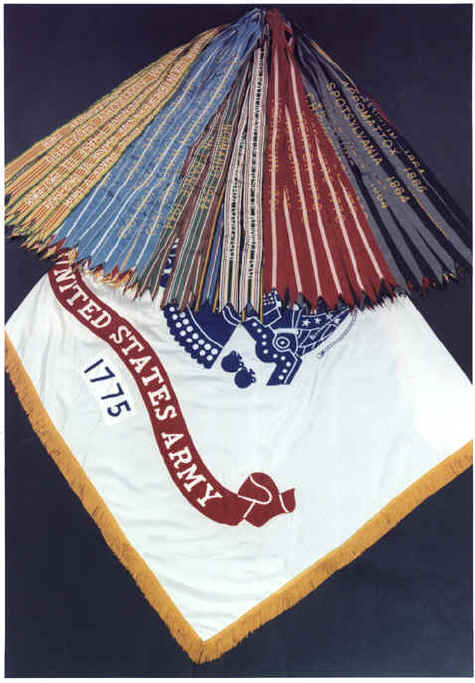
Happy Birthday: US Army


14 June 2006 is the 231st Birthday of the United States Army


Look Sharp ---------------------- See the World


I know it is not current slogan, however


BE ALL YOU CAN BE

Friday, June 09, 2006

A Story of Two Priests

.


From Tom Roeser of On the Other Hand

We always hear of the priests who have problems, but we should not forget that God’s grace has brought us for more that follow Christ with all their heart mind and soul.

“George, the Lord Jesus Christ loves you,” he said in a voice that gave a kind of thrilling affirmation of the fact. “Moreover, all the suffering you are enduring now and have endured is being put up for you as a treasure for your eternal reward. And let there be no mistake: All of us must, one day, face the same trial you do today — and God grant that we will do so with the courage you are exhibiting today which is such an inspiration to us all. You are indeed a champion and we are proud of you and love you.”

It was not just the exquisite words but the tender solicitude of a loving father that Cardinal George displayed; the gentle stroking of the dying priest’s brow, the brushing back of his unkempt, disheveled hair (incredibly for this always preoccupied elderly priest who never primped and had to be reminded to go to a barber, not a gray strand among it), the prelate’s soft patting of the patient’s sagging, stubble-filled cheeks with the skill of a medical nurse — all done with such care that the medical personnel, standing around, waiting to react in case of emergency, were stunned.


This was a cardinal who knew how to soothe, who could easily become, with the delicacy and grace he showed, an expert caregiver himself.

Sunday, May 28, 2006

Memorial Day

.

Let us Pray


Father

Today, though mindful of our faults, we remember those who have died in the service of their country, for it was your Son who taught us that there is no greater love than he who gives his life for another.

We ask you to take those who have died into the warmth of your presence.

We ask for strength an comfort for their families.

We ask that those who were wounded have a speedy recovery and a long and happy life.

We thank you for those who have retuned safely home.

Most of all we ask that we will never have to add to the list of those we remember this day.

Thy will be done.

We ask this through our Lord and Savior, your Son Jesus Christ, and in union with the Holy Spirit.

Amen

Sunday, April 30, 2006

Book Review: California Missions


California Missions
The Earliest Series of Views Made in 1856.

Bellerophon Books, 2000


This book is a series of drawings of the California Missions hand sketched in 1856. It also has the artists diary entries made as he went down the California coast making the drawings.

In 1823 the new Mexican government closed and expropriated the Missions and handed the land over to it’s political supporters. These drawings were made when enough of the original buildings were still standing to make a picture of them. They are very well done.

The text provides a glimpse of what life was like at that time. Lawlessness seems to have been the major social condition. The author survived several adventures along the way.

This is published as children’s book but the pictures and text should be enjoyable to children from 8 to 80.


NOTE: The mission on the cover is San Carlos Borromeo from the orginal with color by a later artist.

Saturday, April 15, 2006

!!! HE IS RISEN !!!

A Happy and Joyous Easter to one and all!!


I had a plan for lent. God had a different one. Please pray for my friend who spent much of last month in the hospital. She is recovering very well, praise God, but it is still a long stretch.

Monday, March 06, 2006

Lent 2006

.


For lent this year I will be taking a break from posting.

Here are some posts for the season from last year.


Forsaken

Passion

He is Risen


May God’s Blessing be with you and yours. See you after Easter.

Saturday, February 25, 2006

Book Review: Voices of Morebath

Voices of Morebath: Reformation and Rebellion in an English Village
Eamon Duffy
Yale University Press


In 1992 Eamon Duffy published his ground breaking The Stripping of the Altars: Traditional Religion in England, 1400-1580 describing the English Reformation as it happened in the parishes. His thesis was that the people of England were Catholic and that the Reformation was imposed on them against their will and only slowly accepted. Especially noteworthy was his use of the records of the parishes and their members, rather than the doings of the senior leaders Protestant and Catholic on which the usual histories are built. Running through out the book are the comments of Sir Christopher Tryche (pronounced Trickey) of Morebath who was the pastor from 1520 to 1574. A shepard of definite opinion on just about anything, with a deep concern for his flock, his comments bring to life the impact of the Reformation on the parishes. In this follow up book Dr Duffy tells the story of Morebath as it is preserved in Sir Christopher’s records. (In this period priests were addressed as Sir as we would use Father.)

Morebath was a village of 33 families (1531, Sir Christopher’s count by family and farm) and about 125-150 souls located in a remote corner of northeast Devon. The secular political and economic organization was the Manor of Morebath, unfortunately the records of the manor were destroyed in WW II. Except that the crop was wool instead of grain this appears to be a fairly typical medieval village, the manor provided the local government services and was also organized the economic activities. So long as the rents were paid, and there were no disputes requiring outside resolution, a village was fairly autonomous.

Duffy’a account is based on the financial records of the parish maintained by Sir Christopher, as such they provide a good accounting of the physical activities of the parish but do not provide direct evidence of the most important item: the faith life of its members. We see something of this from the comments and asides by Sir Christopher, and indirectly by the amount and type of contributions to the parish and how the parish spends it’s money.

Sir Christopher comes to Morebath as an enthusiastic young priest. We see the parish repair the building, increase devotions, the financial records show a parish spending money on things that facilitate worship and teaching the faith. Two of Sir Christopher’s special projects were establishing the veneration of St Sidwell and obtaining black vestments for funerals. He purchases the statue of St Sidwell from his own money and the parish over several years provides for it's decoration. He contributes about half the cost of the vestments the parish contributing the rest, these must have been decorative, it took 20 years of saveing to purchase them.

In November 1534, Sir Christopher’s world began to unravel. Henry VIII decided that in order to get a divorce he would have to break with the Papacy and had Parliament pass the Law of Supremacy making him head of the Church of England. To keep his appointment Sir Christopher would have had to sign the oath of supremacy. Changes began slowly as Henry’s Protestant advisors slowly brought protestant ideas into force. Widely unpopular, they were they were met with a reaction from passive resistance to open rebellion. But since the King was head of the Church of England these changes had the full force of civil law, denying that the King could be head of the church was high treason. In Morebath there was grudging though timely compliance and trying to make the best of the situation. The records show a change in income and purchasing. Voluntary donations are down; there is one time income from the sale of now forbidden objects. If these are not sold the Crown will confiscate them without compensation. Money is spent to buy Protestant replacements and more and more there are external requirements to raise money to support secular activities such as road maintenance and wars. Decrees 1538 and 1540 eliminate the devotion to saints. However until 1548 Morebath is still a Catholic parish. The Pope is no longer prayed for and is denounced four times a year. The veneration of the saints is gone, but still every Sunday Mass is celebrated. Sir Christopher is required to burn the statue of St Sidwell by outside direction. The black vestments were banned a year after their purchase, but are hidden by a parishioner.

In 1548 King Henry dies, King Edward is a minor and the regents appointed to rule in his place are activist Protestants. A series of decrees are published against all things Catholic, most importantly replacing the Mass books with the Protestant Book of Common Prayer. This is too much for South West England; it rises in what is called the Prayer Book Rebellion. Morebath sends five men to join the rebels and the parish pays to buy them weapons. The revolt is ended when the Crown brings in foreign mercenaries who make short work of the amateur rebels. Of the six thousand rebels 3000 to 4000 died, mostly after the revolt was defeated. Three of the five from Morebath never again appear in the parish records. For the rest of Edward's reign things are dismal. A parish that is doing what it needs to do with no spirit, or least any spirit that they would want to record on paper.

But joy returns. King Edward dies and Queen Mary assumes the throne. Things Catholic begin to be restored, and Mass is celebrated. Items of Catholic worship that were hidden come out hiding. The parish records show voluntary donations to restore the Church as well as an increase in ordinary income.

After a few years of rebuilding, Queen Mary dies and Queen Elizabeth restores Protestantism. She bans things Catholic and reestablishes Protestantism. However she does not restore the activist tendencies makes a very few concessions. Morebath gradually turns into a Protestant parish. In 1574 Sir Christopher dies, the Shepard of Morebath to the end. After his death the parish sells his Mass chalice which he never stopped using and buys a Protestant communion cup.


Useless trivia learned.

To make a noun possessive in 16th Century English the word “ys” followed the noun, which over time became contacted to apostrophe "s". From “Hank ys Eclectic Meanderings ” to “Hank’s Eclectic Meanderings.”


How did the reformation succeed in England?

1) It had the full weight of both Church and State authorities. When Henry VIII made himself head of the Church it was high treason to speak or act against the changes.

2) There was still a good bit of continuity between the Catholic and Protestant faiths so being required to stop some specifically Catholic pratices left room for practices that were acceptable to both Catholic and Protestant. It took longer to get specifically Protestant practices adopted.

3) Like the fictional frog being boiled by gradually increasing the heat, the Reformation happened in small steps so that at the end things were accepted that never would have been accepted at the beginning. Sir Christopher’s tenure lasted 53 years about the average life expectancy at that time. At his death, most of the parish had few or no personal memories of the Catholic period.

4) The old saying “As we pray, so we believe” is relevant here, over time the recitation every week of the Book of Common Prayer would gradually change the parish from Catholic to Protestant. Certain sermons had to be read 4 times a year. Sir Christopher had to have read them for at least 30 years. What ever he felt about them at the beginning somewhere around the 40th or 80th time they must have become part of his belief.

5) The example of priests like Sir Christopher, adapting even under protest, set an example that the laity followed. Mathew 18 makes a good case for accepting the decision of the Church on controversial issues. The parish could hardly be blamed for following Sir Christopher’s lead and he could hardly be blamed for following the direction of his bishop.


This is an excellent book. Well written and informative, it brings to life the people of this parish. The glimpse of a late medieval village we see here is useful for understanding the life in the medieval period in general as well as the reformation period. The only problems with the book are that it is based on accounting records and once in a while it reads like a summary of accounting records. Duffy could have been more generous with modern translations of Middle English. But these are trivial. This book is STRONGLY RECOMMENDED.

I would think that despite every thing Sir Christopher would still wish you to pray for the repose of his soul and those of his beloved parishioners.


See alsoLife in a Medieval Village.

Tuesday, February 21, 2006

What is Social Justice.

The term “social justice” is one that causes much comment, seldom neutral. There has been a lot of discussion on this over at Joe Cecil’s In Today's news. So I started wondering just what is Social Justice. It often seems from my reading to be like a sign that was posted at job I once had - “it’s nice to be nice.” You can’t argue with the sentiment but does it mean anything. But I would hope that something that gets this much attention has a little more substance.


Michael Novak, wrote an article on Defining Social Justice in the December 2000 issue of First Things. [HT: Christopher Blosser's The Church and The Liberal Tradition]
I have read very little of his work except for a few columns, but whether I agreed or disagreed he always makes a positive contribution to the topic. Hopefully this can give us a good place start to understand what we should mean by “social justice”.

The occasion for Novak’s article is the 100th anniversary of the birth of Frederick Hayak, who is known for his strident opposition to what many call “social justice”. Novak sees this as an irony since “[Hayek] in his own intellectual life, exemplified the virtue whose common misuse he so deplored.”

Novak summarizes Hayek:

“The trouble with “social justice” begins with the very meaning of the term. Hayek points out that whole books and treatises have been written about social justice without ever offering a definition of it. . . . It becomes, most often, a term of art whose operational meaning is, “We need a law against that.” In other words, it becomes an instrument of ideological intimidation, for the purpose of gaining the power of legal coercion. . . . Most authors assert that they use it to designate a virtue (a moral virtue, by their account). But most of the descriptions they attach to it appertain to impersonal states of affairs, “high unemployment” or “inequality of incomes” or “lack of a living wage” are cited as instances ’. Hayek goes to the heart of the matter: social justice is either a virtue or it is not.”


In the mid nineteenth century John Stewart Mills gave what Novak describes as the canonical meaning of Social Justice:

Society should treat all equally well who have deserved equally well of it, that is, who have deserved equally well absolutely. This is the highest abstract standard of social and distributive justice; towards which all institutions, and the efforts of all virtuous citizens, should be made in the utmost degree to converge [Emphasis added.]

He comments

Mills imagines that societies can be virtuous in the same way that individuals can be. Perhaps in highly personalized societies of the ancient type, such a usage might make sense—under kings, tyrants, or tribal chiefs, for example, where one person made all the crucial social decisions. Curiously, however, the demand for the term “social justice” did not arise until modern times, in which more complex societies operate by impersonal rules applied with equal force to all under “the rule of law.”

For me a central problem with Mills definition is who is doing “social justice”. “Society” is a thing. Actions are done by persons. To generically say the “society does something” is to say that it is the cumulative effect of everyone’s actions, made for proximate purposes, mostly with no concept of final result. Mills says that institutions and virtuous persons “should be made in the utmost degree to converge.” But who is making them converge? It like that sign “it’s nice to be nice”, it sounds pretty, but in concrete terms who does what to whom?

Novak goes on to show that with the lessening importance of faith and the increased power of the state this meaning became more and more a program for a command economy. He describes Hayak’s objections to this development as:

(N)o one individual (and certainly no politburo or congressional committee or political party) can design rules that would treat each person according to his
merit or even his need. No one has sufficient knowledge of all relevant personal details, and as Kant writes, no general rule has a grip fine enough to grasp
them.


Which is to say that Mill’s definition calls for something that is unworkable at best, and possibly harmful. Thus

(T)he “social” in “social justice” refers to something that emerges not organically and spontaneously from the rule–abiding behavior of free individuals, but rather from an abstract ideal imposed from above

Which would require a level of coercion that would violate human dignity in an attempt to achieve unworkable goals.

So why does Novak assert that he himself [Hayak] was a practitioner of social justice—even if one adds, as one must, “social justice rightly understood.”

Novak’s answer is that “social justice rightly understood” consists of to features that he found exemplified Hayak’s life.

First, the skills it requires are those of inspiring, working with, and organizing others to accomplish together a work of justice. These are the elementary skills of civil society, through which free citizens exercise self–government by doing for themselves (that is, without turning to government) what needs to be done

The second characteristic of “social justice rightly understood” is that it aims at the good of the city, not at the good of one agent only.


I think Novak’s “social justice rightly understood” provides a more operationally useful definition than Mills. In the first point the actor is “free citizens” using the “elementary skills of civil society.” It is clear who is doing the acting. Everyone has his role, and it is a role that is with in the ability of everyone. The second point “the good of the city” provides a focus for individual action. Since this is done “without turning to government” the chance of descending to totalitarianism is trivial.


Comment

I think the biggest thing missing in discussion of “social justice” is a sense of charity to the other side of the discussion. Prayer, discussion , study, and charity to our neighbors should always be perquisite of any discussion of “social Justice.

This is why the distinction between social justice as virtue and a state of affairs is important.

Often in a secular context it seems the argument is that X is required for Social Justice, and any one who opposes X has cooties. There is little or no cogent argument that the proposed action will (or even can) accomplish the desired goal, and asking for a cogent argument is likely to get one accused of being a fascist or some such. From my, mostly secular, reading it seems that “social justice” is usually a “term of art” to support achieving the authors desired “state of affairs”. A polemical club that avoids the necessity to make a cogent argument and respond to reasonable criticism. It seldom means encouraging a virtue. Sometimes I get the impression that supporting a “state of affairs” allows some to ignore being personally virtuous, while claiming the moral high ground.

The Church teaches certain principles for applying the virtue of Social Justice. Someone who has a general Catholic formation will usually agree with these even if they have no formal education in the Church's Social teaching. But in the area of prudential judgment there is often wide disagreement among committed Catholics. This is because there are different understandings of how economic, political, and social processes work and subsequently different and often mutually exclusive understandings of how to practice the virtue of social justice. But many people cannot identify in their own mind where the Church teaching ends and prudent judgment begins. As these issues often carry a good amount of emotion it is easy to accuse another rejecting the social justice teaching when in fact they are rejecting poor economics.

It is not uncommon for Jack to believe that a course of action is objectively evil, while Jill thinks it is the greatest thing since sliced bread, and the other way around. They both believe that to follow the others suggestion would be to commit an objectively evil act with full knowledge and consent. If one is in authority (especially pastoral authorty) he should be careful that he is not using his office to suggest or require his subordinates to commit what the subordinate considers to be an objectively evil act with full knowledge and consent. In discussions we should take care to be sure the other person understands that though we they disagree with them we would not expect them to support what they think is objectively evil end, with knowledge and consent, even so that good can come of it.

The items that constitute prudent judgement can have a wide variety of interpretations. If we see social justice as a virtue, then different people can discuss these with charity, learn form each other and from mistakes, and eventually come to better ways to achieve a just world. If we see social justice as a “state of affairs” then who ever defined the “state of affairs” has begged the question. It supposes we uncritically follow the designated route, to heck with the consequences.

Social Justice is a virtue!


Update: 6 Sepember 2009
See Also

James Chapter Two: Show No Partiality
Social Justice Posts

Saturday, February 18, 2006

Non Cogito, Ergo Poof

.


Rene Descartes sat down in a restaurant

The waiter asks him “Would you like some wine, sir?”

He answers, “I think not.”


And - poof - he disappears.

Sunday, February 12, 2006

Theology 911 * Final Exam

From Julie the Happy Catholic


1. Summarize Thomas Aquinas' Summa Theologiae in three succinct sentences. You may use your Bible.

2. St. Martin of Tours, Pope Clement VII and Karl Barth were not contemporaries. Had they known each other, how might the history of the Reformation have turned out differently?

3. Define a moral system that satisfies Liberals, Conservatives, Moderates, and the entire population of Ancient Rome, ca. 3 BCE.

4. Memorize the Bible. Recite it in tongues.

5. Imagine you have the stigmata. Would it affect your productivity at work? Would you still be admitted into fine restaurants? Would it be covered by your medical insurance, or should it constitute a pre-existent condition?

6. What would it mean to be eternal, co-eternal, and non-existent all at once?

7. St. Thomas Aquinas and St. Augustine of Hippo decide to rob a bank. The note to the teller is 1,200 pages long, not counting footnotes, complete with a promise of damnation if the teller does not accept immediate Baptism. In the middle of the heist, they engage in an extended debate as to whether or not the money really exists. Are they committing a mortal or a venial sin?

8. Speculate on what the current status of salvation history might have been if Abraham had just stayed in Ur.

Friday, January 20, 2006

War Termination

War is the continuation politics (or policy) by other means
Major General Carl von Clausewitz

The mission of the Army is to close with and destroy the enemy by means of fire and maneuver.
US Army

Should Deterrence Fail: War Termination in Campaign Planning
Lieutenant Colonel James W Reed
Parameters 1993


Wars end. Preferably they end on favorable terms and accomplish the ends for which they were fought. But how do we get there? This 1993 article from Parameters, the Journal of the U. S. Army War Collage, by James W Reed addresses the question of war termination especially from the point of view of the operational commander. While the operational commander is primarily fighting the battle his actions should be pointed not just to the battlefield defeat of the enemy forces, but also seeing that the enemy’s defeat helps accomplish the political goals of the war.

First Reed asks if there is a military role in conflict termination. His general comments are that since war is a continuation of policy by other means the military should plan their operations not simply to defeat the enemy but to end the war with the policy accomplished. Military action can support diplomatic action by creating an incentive for the enemy to accept or negotiate terms before a defeat. The way in which the enemy was defeated can have bearing on post war dealings with the former enemy or his successors. He also sees the transition from war to peace as not simply an end to the shooting but a requirement to support reestablishment of civil government, take care of refugees, repair war damage etc which would require coordination with outside agencies, national and international, that are experts in these items.


Next he looks at the state of the war termination in the Defense Departments doctrinal literature. He finds the issue is addressed as a general statement as something that should be done. But there is virtually no discussion of how it should be done. (I found that these subjects were addressed supplemental Student Texts in service schools with reproduced articles by distinguished scholars and discussion seminars, but never anything giving an “Official US Army” position on a political subject.)

He sees the major cause for this is the separation in western thought between the military and civilian (political) spheres. War termination is tied with the political goals, and the military is reluctant to intrude on political questions. Political leaders often see their role as beginning at the peace conference table and thus are not overly interested in the military operational practice. He addresses briefly in the footnotes the fact that left and right leaning politicians are likely to have very different ideas on war goals, making any discussion by the military a virtual minefield.

Most of the discussion is directed toward situations where the enemy power would continue to exist after the war, not régime change policies. But the importance he places on the transition from war to peace implies that if there is a régime change policy, coordination between the operational military commander and civilian agencies is even more important than usual. The military must assume roles no longer performed by the enemy government. Writing from a US perspective he does not address how the commander in a losing situation might use his forces to mitigate or frustrate the enemies accomplishment of his goals despite military victory.

He has a long example form the Korean War where US objectives changed several times and how the military interacted with political leadership, and several other lesser examples.

Analysis:

He recommends several guidelines for campaign planners.

1. Identify a distinct war termination phase in the campaign planning process

2. Emphasize a regressive (i.e. backward-planning) approach to campaign development

3. Define the operational conditions to be produced during the terminal phase of the campaign in explicit, unambiguous terms.


These first three recommendations are really the “backward planning process” taught in any management class or workshop. In a more traditional military terms the first principle of war is the Objective know what you are supposed to and focus on it. In war termination planning the political leadership needs to know and state clearly what it wants to accomplish, the operational commander must plan his operations so that the battlefield defeat of the enemy accomplishes these objectives.

4. Consider how efforts to eliminate or degrade your opponent's command and control may affect, positively or negatively, your efforts to achieve particular objectives

This comment is unusual. Normally destroying the enemies’ ability to command and control is a very desirable goal. But the point is well taken, in some situations leaving the enemy the ability to issue a cease fire or surrender order could be desirable. A cease fire/surrender order would carry more weight when issued by ones own superiors especially to units that are not yet in tactical difficulty. In my reading, at the end of a campaign it is common for units not to get cease fire/surrender orders in time, sometimes with very tragic consequences..

5. Consider the manner in which the tempo of the terminal phase of an operational campaign affects the ability to achieve established policy objectives

Early in a war the operational commander is likely to be concerned with the survival of his force and getting into a decisive position and does not have to worry about war termination except to prevent it from happening on the enemies terms. But at the end of the war he has to be concerned with obtaining the terrain needed for political reasons, capture of war criminals, restoration of government and many other things besides simply defeating the enemy. While the overall enemy may be defeated, individual enemy units may retain considerable capability; he needs to be sure that these cannot frustrate political goals. This is often a very fast moving situation; there may not be time to consult as to what needs to be done.

6. View war termination not as the end of hostilities but as the transition to a new post-conflict phase characterized by both civil and military problems.

Even if there is a clean end of the fighting, there is much that needs to be done to restore effective public services and a normal society. The nature of military operations breaks down normal civil life especially law enforcement. Often, at first the military is the only thing present that can start the recovery process. At the very least the military is the only force present that can provide law enforcement services. While the military role should diminish it is most usually impossible to a have an on/off change.


The quotes that begin this post bring up a dilemma; the proper role of the military "Closing with and destroying" does not address the whole problem "a continuation of politics (or policy) ." Quite properly the military should be subordinate to civilian leadership.

The military services are properly unwilling to intrude on the role of the civilian leadership. The elected/appointed civilian leadership comes to office, often for reasons that have nothing to do with military knowledge, and sometimes, without using too much hyperbole, with no more a background than watching “The Sands of Iwo Jima” and/or “Apocalypse Now” on the late show. Usually they bring in some academic experts for advice and they have the advice of the career diplomats for assistance, but there will always be an opportunity for misunderstanding and miscommunication.

Because the military should not intrude on what are properly civilian functions, it is incumbent on the civilian leadership to initiate process of translating the national goals in to military requirements. Keeping within the proper bounds of a proper civilian/military relationship, the operational commander has to determine what his superiors want to accomplish and how and discuss with them the implications and opportunities. If he gets a clear understanding of what is desired he will often have the flexibility to shape his operations to be of greater assistance to the national goals than simply destroying the enemy.

This article is especially interesting in view of recent actions by the US. The Afghanistan and Iraq invasions, the insurgency in Iraq, and possible action against Iran would make interesting case studies. In the first two at least it seems that the political leadership in the Defense Department had definite ideas on the role of field commanders relative to post war operations – this is not the business of the field commander and the only instructions were that others would take it over after the fighting. - Case studies in how not to do it.

Wednesday, January 18, 2006

The all time second best blonde joke.

Why are blonde jokes one liners?

So the Brunettes can understand them.


TM Lutas has the best blonde joke ever.

Monday, January 16, 2006

A Game of Chicken

.

It appears that Iran has or is going to have nuclear weapons shortly. Which is one thing, to take the President of Iran seriously, he intends to use them. That is something else. As Wretchard of the Belmont Club noted in the his comments section, the evidence is much stronger than for Iraq, but every one now has a much healthier respect for the limitations of any intelligence estimate.

John Keegan (HR:Belmont club) has an article reviewing the difficulties of military action to close down Iran’s nuclear weapons program.

America and the EU3 must therefore consider other, harsher methods to restrain Iran. The fact that the United States at present deploys a large army in Iraq is a factor that must give the ayatollahs pause. To stage a second war in the Middle East would not be a desirable initiative at present for America and would certainly be highly unpopular at home and among its allies. Moreover, Iran, as the possessor of the second largest oil reserves in the world and occupier of a strategic position athwart the sea routes delivering oil to most of the consuming world, has its own means of retaliation ready to hand.

Nevertheless, the West cannot simply let things drift. Military action by whatever agency cannot be written out, but will be a last resort. ... For if the West is considering military action, so are the ayatollahs. ... Moreover, while Iran has its own armoury of medium-range missiles suitable for nuclear delivery, the ayatollahs are also known to favour the placing of nuclear warheads in target cities by terrorists travelling by car or public transport. This is a bad and worrying time in world affairs.


Niall Ferguson has a look at the world war of 2007.

So history repeated itself. As in the 1930s, an anti-Semitic demagogue broke his country's treaty obligations and armed for war. Having first tried appeasement, offering the Iranians economic incentives to desist, the West appealed to international agencies - the International Atomic Energy Agency and the United Nations Security Council. Thanks to China's veto, however, the UN produced nothing but empty resolutions and ineffectual sanctions, like the exclusion of Iran from the 2006 World Cup finals.


Victor David Hanson (HT: Dignified Rant) also discusses the possibilies.

Experts warn that we are not talking about a Clintonian one-day cruise-missile hit, or even something akin to General Zinni’s 1998 extended Operation Desert Fox campaign. Rather, the challenges call for something far more sustained and comprehensive — perhaps a week or two of bombing at every imaginable facility, many of them hidden in suburbs or populated areas. Commando raids might need to augment air sorties, especially for mountain redoubts deep in solid rock


We have a nice little game of chicken.

Allowing a regime like Iran’s to have Nukes is dangerous.

-More so to Iran’s neighbors than to the US. If Iran’s leaders are willing to use nukes against the Israel they are probably willing to use them to solve disputes with other neighbors.

-They probably do not yet have the ability to insure that a nuke is an airburst rather than a ground burst, and even it they do they would be very likely to choose a ground burst against Israel to make the destruction more complete. Ground bursts pick up large amounts of surface material as dust, make it radio active, this is what “falls out.” A ground burst could create radioactive fallout that would impact a large area outside Israel, depending on many variables Chernobyl could be a minor comparison.)

Most every country in the area has a strong desire to see that Iran never uses nukes. The theoretical possibility of fallout patterns covering Western Europe probably explains why the EU3 started their negotiation process and why it is a major issue to them. Except for Europe collectively, probably Israel, maybe Russia depending on what still works, and the US, no country has the ability to take out the nukes unilaterally. But many countries from India to the EU member’s individually have the ability to make a notable contribution.

Neither the US nor Israel wants to go it alone. The other countries do not want to contribute if they can avoid it. So it is a game of chicken, will the US or Israel will jump and go it alone. Or will other counties turn aside from their previous course and sign on to a cooperative effort.


Which makes this snippet of an interview of from the German magazine Spiegel interesting. (HT: David’s Medienkritik

SPIEGEL: How concerned are you about Iran?

Rumsfeld: All of us have to be concerned when a country that important, large and wealthy is disconnected from the normal interactions with the rest of the world. They obviously have certain ambitions, powers and military capabilities ...

SPIEGEL: ...and nuclear ambitions...

Rumsfeld: That's apparently what France, Germany, the UK and the International Atomic Energy Agency have concluded. Everyone wants to have the Iranians as part of the world community, but they aren't yet. Therefore there's less predictability and more danger.

SPIEGEL: The US is trying to make the case in the United Nations Security Council.

Rumsfeld: I would not say that. I thought France, Germany and the UK were working on that problem.

SPIEGEL: What kind of sanctions are we talking about?

Rumsfeld: I'm not talking about sanctions. I thought you, and the U.K. and France were.

SPIEGEL: You aren't?

Rumsfeld: I'm not talking about sanctions. You've got the lead. Well, lead!

SPIEGEL: You mean the Europeans.

Rumsfeld: Sure. My Goodness, Iran is your neighbour. We don't have to do everything!


-----------

For the tyrants must come down an' dictators frown
When our Uncle named Sam says "Stop"!
(Poor beggars! -- we're sent to say "Stop"!)


I know responsibilities, wanted or not, come with being the worlds only super power, but IMHO it is someone else’s turn to say “STOP”!.

Saturday, January 07, 2006

The End of the World is Nigh!

David Duff of Duff and Nonsense has evidence that The end of the world is nigh!

To wit

To paraphrase, 'look on my news, ye mighty, and despair'!. Today, gentlemen are no longer wearing ties with suits! Perhaps I should be more precise, today, those pretending to be gentlemen, are no longer wearing ties with suits. Take, if you've the stomach for it, the leaders of our two national political parties. We already know that Mr. Blair is a parvenu with only the most casual connection to truth and honour, traditionally, the emblems of a gentleman irrespective of his status in life. Now the leader of her Majesty's loyal opposition, an old Etonian and thus automatically suspect, shows every sign of following his natural leader, Mr. Blair, by morphing into whatever the bien pensants from both the political and fashion worlds tell him to be. Thus, he stands as a Conservative and talks Left-wing rubbish, and, worst of all, he fails to wear a tie with a suit.

Uh, David, I should point out that the leader of the Free World comes from Texas where if you wear a tie, except maybe as a concession to those Northern Yankees, you can be hung with your own necktie. He will undoubtedly be imatated by those who do not realize the limitations of Texan culture. And I was hoping the mother country would set a counter example for us poor colonials.

Sunday, January 01, 2006

Sola Scriptura and the Authority of the Church.

.


One of the important questions in Christianity is the relationship between Scripture and the Church. A particularly contentious issue is question of the authority of the Church in relation to the Reformation doctrine of sola scriptura. An interesting idea would be to look at just what scripture has say about the authority of the Church? Let us look!


First of all it is Christ’s Church.

Now when Jesus came into the district of Caesarea Philippi, he asked his disciples, "Who do men say that the Son of man is?" And they said, "Some say John the Baptist, others say Elijah, and others Jeremiah or one of the prophets." He said to them, "But who do you say that I am?" Simon Peter replied, "You are the Christ, the Son of the living God." And Jesus answered him, "Blessed are you, Simon Bar-Jona! For flesh and blood has not revealed this to you, but my Father who is in heaven. And I tell you, you are Peter, and on this rock I will build my church, and the powers of death shall not prevail against it. I will give you the keys of the kingdom of heaven, and whatever you bind on earth shall be bound in heaven, and whatever you loose on earth shall be loosed in heaven." Then he strictly charged the disciples to tell no one that he was the Christ (Matthew 16:13-20)

There are many things that can be pulled out of the that passage, the important ones for out purpose are:

1 Jesus founded the Church.
2 It is His Church.
3. He promised that the gates of death (Hell or Hades in other translations) will not prevail against it.
4. One might disagree on the full extent of the “binding and loosing” but no one cannot deny that in some sense the Church is connected with authority to “bind and loose.”
5. Christ founded a Church and promised it some sort of protection, and some sort of authority.


Christ described a role for the exercise of the Church's authority

"If your brother sins against you, go and tell him his fault, between you and him alone. If he listens to you, you have gained your brother. But if he does not listen, take one or two others along with you, that every word may be confirmed by the evidence of two or three witnesses. If he refuses to listen to them, tell it to the church; and if he refuses to listen even to the church, let him be to you as a Gentile and a tax collector. Truly, I say to you, whatever you bind on earth shall be bound in heaven, and whatever you loose on earth shall be loosed in heaven. Again I say to you, if two of you agree on earth about anything they ask, it will be done for them by my Father in heaven. For where two or three are gathered in my name, there am I in the midst of them." (Matthew 18 15:20)

There are some key points we can pull out of this passage for our purpose, again there is much more in it.

1. The paragraph after this is where Jesus talks about forgiving 7 times 70 times. I think this context is to make sure that 18:15-20 is not understood to apply where forgiveness is enough but when the sin is something that is very harmful and needs to be corrected.
2. Notice when you cannot resolve the issue privately you take it to the Church. If the Church decides the issue and the other person (or yourself if the decision goes the other way) refuses to listen “even to the Church” treat the person as a gentile and a tax collector.
3. Notice the word even as though it is hard to imagine some one refusing to listen to the Church Christ established.
4. The famous quote of where “two or three are gathered in my name” is clearly associated with the Church.
5. In the context of dealing with serious sin he instructs the Apostles that what they “bind and loose” as the leaders of the Church is “bound or loosed.”


In Acts we see the Church acting according to Christ’s instructions.

But some men came down from Judea and were teaching the brethren, "Unless you are circumcised according to the custom of Moses, you cannot be saved." And when Paul and Barnabas had no small dissension and debate with them, Paul and Barnabas and some of the others were appointed to go up to Jerusalem to the apostles and the elders about this question. So, being sent on their way by the church, they passed through both Phoenicia and Samaria, reporting the conversion of the Gentiles, and they gave great joy to all the brethren. When they came to Jerusalem, they were welcomed by the church and the apostles and the elders, and they declared all that God had done with them. But some believers who belonged to the party of the Pharisees rose up, and said, "It is necessary to circumcise them, and to charge them to keep the law of Moses."

The apostles and the elders were gathered together to consider
this matter. And after there had been much debate, Peter rose and said to them, "Brethren, you know that in the early days God made choice among you, that by my mouth the Gentiles should hear the word of the gospel and believe. And God who knows the heart bore witness to them, giving them the Holy Spirit just as he did to us; and he made no distinction between us and them, but cleansed their hearts by faith. Now therefore why do you make trial of God by putting a yoke upon the neck of the disciples which neither our fathers nor we have been able to bear? But we believe that we shall be saved through the grace of the Lord Jesus, just as they will."

And all the assembly kept silence; and they listened to Barnabas and Paul as they related what signs and wonders God had done through them among the Gentiles. After they finished speaking, James replied, "Brethren, listen to me. Simeon has related how God first visited the Gentiles, to take out of them a people for his name. And with this the words of the prophets agree, as it is written, 'After this I will return, and I will rebuild the dwelling of David, which has fallen; I will rebuild its ruins, and I will set it up, that the rest of men may seek the Lord, and all the Gentiles who are called by my name, says the Lord, who has made these things known from of old. 'Therefore my judgment is that we should not trouble those of the Gentiles who turn to God, but should write to them to abstain from the pollutions of idols and from unchastity and from what is strangled and from blood. For from early generations Moses has had in every city those who preach him, for he is read every sabbath in the synagogues."

Then it seemed good to the apostles and the elders, with the whole church, to choose men from among them and send them to Antioch with Paul and Barnabas. They sent Judas called Barsabbas, and Silas, leading men among the brethren, with the following letter: "The brethren, both the apostles and the elders, to the brethren who are of the Gentiles in Antioch and Syria and Cilicia, greeting. Since we have heard that some persons from us have troubled you with words, unsettling your minds, although we gave them no instructions, it has seemed good to us, having come to one accord, to choose men and send them to you with our beloved Barnabas and Paul, men who have risked their lives for the sake of our Lord Jesus Christ. We have therefore sent Judas and Silas, who themselves will tell you the same things by word of mouth. For it has seemed good to the Holy Spirit and to us to lay upon you no greater burden than these necessary things: that you abstain from what has been sacrificed to idols and from blood and from what is strangled and from unchastity. If you keep yourselves from these, you will do well. Farewell."
(Acts 15:1-29)

Some points we can pull from this passage.

1. The “party of the Pharisees” created a crisis in Antioch that could not be forgiven and dismissed. There was a sin of heresy that challenged the integrity of the Gospel
2. The Church at Antioch tried to resolve the issue locally.
3. They brought in or witnesses to help mediate the situation, who better than Paul and Barnabas.
4. Unable to reach a decision locally the matter was referred to the Church as a whole represented in the persons of the Apostles and elders at Jerusalem.
5. The church made a decision.
6. The decision bound the whole church not just Jerusalem.
7. Certainly, as far more than two were gathered in His Name, Christ was with them.
8. If this had not been the decision, would not “the gates of Hell” have prevailed against the Church?


Elsewhere the New Testament

shows the Church as being essential to spreading the truth of the Gospel.

”that through the church the manifold wisdom of God might now be made known to the principalities and powers in the heavenly places.”(Eph 3:10)

”I hope to come to you soon, but I am writing these instructions to you so that, if I am delayed, you may know how one ought to behave in the household of God, which is the church of the living God, the pillar and bulwark of the truth.” 1 Tim 3:14-15

It is in the Church that the manifold wisdom of God becomes known. “The Church is the pillar and bulwark of truth.” Of course, this makes sense since the Church is the Body of Christ and He is the way, truth and the life.


Conclusion

While there are different opinions on the extent of it’s authority, it is apparent that the Bible teaches that the Church has a clear authority of its own to "bind and loose" on questions of the content of Christian teaching that goes far beyond what is possible if the sola scriptura is the sole rule of faith.


See the related post Scripture and Tradition

Saturday, December 31, 2005


! ! ! H a p p y N e w Y e a r ! ! !

Friday, December 30, 2005

A Sword Will Pierce Your Heart

.


Amy Wellborn has an article at National Review which she subtitles the The Dark Side of Christmas.
HT: Orthodoxy Today


The really traditional Christian remembrance of the Nativity is not about sweetness. It is about awe, fear, and trembling, and it is shot through with hints of suffering to come.

Mary, with a scandalous pregnancy. Joseph, courageous enough to take her on despite it. A birth among farm animals. The threat of death, from the very start, necessitating flight. Mary, told by the prophet Simeon that because of her son, her soul will be pierced by a sword (Luke 2:35).

We view the elements of the story in a nostalgic haze — how sweet to be born with the goats. But is it? Is it sweet? Would you want to give birth among goats?


How charming that Mary and Joseph had to wander before and after the birth of the child. Charming until you remember the reasons why, the doors shut in the face of a heavily pregnant woman, the threat of death from a jealous king.

. . .

The message is clear and hard: Following this baby, as he reaches to us from the resin manger, looking out at us with the soft-eyed cattle and docile sheep, comes at a price.

There is an edge to Christmas, a harshness, and a different kind of promise than that implied by the easy words of peace and glad tidings. It is a mystery, all of it. The Word made flesh indeed, but into a world that was from the beginning set against it, that sought with every bit of strength at hand to stay in the darkness.

. . .

Glad tidings of comfort and joy, and Merry Christmas indeed. But without awareness of the risk of discipleship, and the reality that the baby in the manger ends up hanging on a cross, those words have about as little power to change the world as "Happy Holidays."


Read the whole thing.

Sunday, December 25, 2005

! ! ! Merry Christmas one and all ! ! !

Friday, December 23, 2005

The Eve of Christ’s Mass

.


From a sermon of St Augustine

Awake, mankind! For your sake God has become man. Awake, you who sleep, rise up from the dead, and Christ will enlighten you. I tell you again: for your sake, God became man.

You would have suffered eternal death, had he not been born in time. Never would you have been freed from sinful flesh, had he not taken on himself the likeness of sinful flesh. You would have suffered everlasting unhappiness, had it not been for this mercy. You would never have returned to life, had he not shared your death. You would have been lost if he had not hastened ‘to your aid. You would have perished, had he not come.

Let us then joyfully celebrate the coming of our salvation and redemption. Let us celebrate the festive day on which he who is the great and eternal day came from the great and endless day of eternity into our own short day of time.

He has become our justice, our sanctification, our redemption, so that, as it is written: Let him who glories glory in the Lord.

Truth, then, has arisen from the earth:
Christ who said, I am the Truth, was born of the Virgin.

And justice looked down from heaven: because believing in this new-born child, man is justified not by himself but by God.

Truth has arisen from the earth: because the Word was made flesh. And justice looked down from heaven: because every good gift and every perfect gift is from above.
Truth has arisen from the earth:
flesh from Mary. And justice looked down from heaven: for man can receive nothing unless it has been given him from heaven.

Justified by faith, let us be at peace with God: for justice and peace have embraced one another. Through our Lord Jesus Christ: for Truth has arisen from the earth. Through whom we have access to that grace in which we stand, and our boast is in our hope of God’s glory.
He does not say: “of our glory”, but of God’s glory: for justice has not come out of us but has looked down from heaven. Therefore he who glories, let him glory, not in himself, but in the Lord.

For this reason, when our Lord was born of the Virgin, the message of the angelic voices was: Glory to God in the highest, and peace to men of good will.

For how could there be peace on earth unless Truth has arisen from the earth, that is, unless Christ were born of our flesh? And he is our peace who made the two into one: that we might be men of good will, sweetly linked by the bond of unity.

Let us then rejoice in this grace, so that our glorying may bear witness to our good conscience by which we glory, not in ourselves, but in the Lord. That is why Scripture says: He is my glory, the one who lifts up my head. For what greater grace could God have made to dawn on us than to make his only Son become the son of man, so that a son of man might in his turn become son of God?

Ask if this were merited; ask for its reason, for its justification, and see whether you will find any other answer but sheer grace.

Saturday, December 17, 2005

Fourth Sunday of Advent

.


Once David had settled into his house and the Lord had given him rest from all the enemies surrounding him, the king said to the prophet Nathan, ‘Look, I am living in a house of cedar while the ark of God dwells in a tent’. Nathan said to the king, ‘Go and do all that is in your mind, for the Lord is with you’.
But that very night the word of the Lord came to Nathan:
‘Go and tell my servant David, “Thus the Lord speaks: Are you the man to build me a house to dwell in? I took you from the pasture, from following the sheep, to be leader of my people Israel; I have been with you on all your expeditions; I have cut off all your enemies before you. I will give you fame as great as the fame of the greatest on earth. I will provide a place for my people Israel; I will plant them there and they shall dwell in that place and never be disturbed again; nor shall the wicked continue to oppress them as they did, in the days when I appointed judges over my people Israel; I will give them rest from all their enemies. The Lord will make you great; the Lord will make you a House. Your House and your sovereignty will always stand secure before me and your throne be established for ever.”’
2 Samuel 7:1-16


David was a King after God’s own heart, so God promised that his line would be king forever. But most of David’s successors were anything but a King after God’s own heart. The fortunes of Israel reflected this. But God had a plan.

He will be great and will be called Son of the Most High. The Lord God will give him the throne of his ancestor David; he will rule over the House of Jacob for ever and his reign will have no end.’ Luke 1-32-33

He sent his own Son to be a man in the line of David. Who since he was God’s only begotten son would always be a King after God’s own heart.

It is this King, born in a manger, through whom we have access to the Father, who is our Lord and Savior.

All praise and glory to God for ever and ever!

Friday, December 16, 2005

The Innkeeper

.


Tells his side:

They think I'm some kind of cruel, heartless landlord. Someone must have told them that. But they're wrong, just plain wrong, and it's time to set the record straight, once and for all.

People say I'm an innkeeper. I suppose you'd call it an inn. To us it's just a big house. My grandfather, Joshua ben-Yahoudi, built it back when his trading business was at a peak. And he built it big enough to fit all fourteen kids.

Read on

Painting by James Tissot 1836-1902

Sunday, December 11, 2005

Rejoice! Rejoice! Emmanuel shall come to thee, O Israel!


One of my favorite Christmas Carols is O Come O Come Emmanuel. The verses, based on scripture describe the hope for which Israel waited the coming of the Messiah and which we share in the celebration of Advent.

The monks of the Early Church, and still today, sing at Vespers the song of Mary in Luke’s Gospel My soul magnifies the Lord. The antiphon that would be sung with it varies with the season and day. The antiphons for 17th to the 23d of December date from at least the 9th Century and were at some point collected in to a single hymn, Thomas Aquinas is reputed to have provided a Gregorian chant setting for them. In the 19th Century they were set to a French folk tune and given the Chorus.

The Antiphons

December 17

O WISDOM, who came from the mouth of the Most High, reaching from end to end and ordering all things mightily and sweetly: COME, and teach us the way of prudence. Amen. "O Sapientia..."

O Wisdom: Proverbs 1:20; 8; 9 and I Corinthians 1:30


December 18

O LORD AND RULER of the House of Israel, who appeared to Moses in the flame of the burning bush and gave him the law on Sinai: COME, and redeem us with outstretched arms. Amen. "O Adonai..."

O Lord and Ruler of the House of Israel: Exodus 3; Micah 5:2; Matthew 2:6


December 19

O ROOT OF JESSE, that stands for an ensign of the people, before whom the kings keep silence and unto whom the Gentiles shall make supplication: COME, to deliver us, and tarry not. Amen. "O Radix Jesse..."

O Root of Jesse: Isaiah 11:10; Romans 15:12; Revelation 5:5


December 20

O KEY OF DAVID, and Sceptre of the House of Israel, who opens and no man shuts, who shuts and no man opens: COME, and bring forth the captive from his prison, he who sits in darkness and in the shadow of death. Amen. "O Clavis David..."

O Key of David: Isaiah 22:22; Revelation 3:7


December 21

O DAWN OF THE EAST, brightness of light eternal, and Sun of Justice: COME, and enlighten those who sit in darkness and in the shadow of death. Amen. "O Oriens..."

O Dawn of the East (Dayspring): Luke 1:78, 79; Malachi 4:2


December 22

O KING OF THE GENTILES and their desired One, the Cornerstone that makes both one: COME, and deliver man, whom you formed out of the dust of the earth. Amen. "O Rex..."

O King of the Gentiles (Nations): Revelation 15:3; Psalm 118:22; Isaiah 28:16; Matthew 21:42; Mark 12:10; Luke 20:17; Acts 4:11; Ephesians 2:20; I Peter 2:6


December 23

O EMMANUEL, God with us, Our King and Lawgiver, the expected of the nations and their Saviour: COME to save us, O Lord our God. Amen. "O Emmanuel..."
O Emmanuel: Isaiah 7:14; 8:8; Matthew 1:23; Haggai 2:7 (KJV)


Turn up your speakers and Enjoy


Thanks to Dymphna of The Neighborhood of God for the inspiration.

Update 08/12/2007: the old audio clip died so I added the UTUBE.


Saturday, December 10, 2005

The Third Sunday of Advent

The spirit of the Lord has been given to me,
for the Lord has anointed me.
He has sent me to bring good news to the poor,
to bind up hearts that are broken;

to proclaim liberty to captives,
freedom to those in prison;
to proclaim a year of favour from the Lord,
a day of vengeance for our God.

I exult for joy in the Lord,
my soul rejoices in my God,
for he has clothed me in the garments of salvation,
he has wrapped me in the cloak of integrity,
like a bridegroom wearing his wreath,
like a bride adorned in her jewels.

For as the earth makes fresh things grow,
as a garden makes seeds spring up,
so will the Lord make both integrity and praise
spring up in the sight of the nations.
Isaiah 61:1 – 11


Jesus commented on this passage:

And he came to Nazareth, where he had been brought up; and he went to the synagogue, as his custom was, on the sabbath day. And he stood up to read; and there was given to him the book of the prophet Isaiah. He opened the book and found the place where it was written, "The Spirit of the Lord is upon me, because he has anointed me to preach good news to the poor. He has sent me to proclaim release to the captives and recovering of sight to the blind, to set at liberty those who are oppressed, to proclaim the acceptable year of the Lord." And he closed the book, and gave it back to the attendant, and sat down; and the eyes of all in the synagogue were fixed on him. And he began to say to them, "Today this scripture has been fulfilled in your hearing."Luke 4:16-21


The reading from Isaiah is a direct prophecy of the coming of the Messiah, fulfilled in the person of Jesus. His statement that "Today this scripture has been fulfilled in your hearing” proclaimed the arival of the Messiah. That the prophecies are fulfilled, and more than fulfilled: for the Father sent his only begotten Son as the Messiah! The power of sin will be defeated, and those who accept His free offer of grace will be reconciled into the Family of God.

Tuesday, December 06, 2005

Military Culture Wars

Review: Occupations, Cultures, and Leadership in the Army and Air Force
George R. Mastroianni
Parameters, Winter 2005-06, pp. 76-90


The Fall Winter issue of Parameters, the journal of the US Army War Collage has a very interesting article by Dr. George R. Mastroianni on the cultural differences between the military services. He is well qualified for this as he is a Professor in the Department of Behavioral Sciences and Leadership at the Air Force War Collage and a Lieutenant Colonel in the US Army Reserve.

I spent several years as a civilian employee of a jointly manned headquarters, the differences between the services cultures are real, usually the cause of much humor, but also a potential problem in our ability to conduct war and preserve the peace.

The article's focus is on the differences between the Army and the Air Force officer corps, which is where he has his personal experience. He also limits his study to combat arms officers for the Army and pilots for the Air Force as these groups set the standard for their respective services.

He starts out with the observation that large organizations can be characterized by their members intuitional and/or occupational commitment. Are the members of the organization committed to the organization and its ideals or to a occupation that they can take to another organization depending on their self interest. He makes the assertion that, while officers in both services have share these commitments, Army officers have a stronger intuitional commitment that the Air Force officers. Partly this is because pilots have a portable skill, they can leave the service and be airline pilots, infantry officers can leave the service and be anything but infantry officers.

The differences that different occupations have on the cultures is also a factor, the way you process information as pilot flying at supersonic speeds is different than the way you would process information in a fox hole. By the time these officers reach mid and high level positions these patterns of thinking come with them and effect their actions and decisions.

A major difference between the two services is the their approach to leadership and the relationship between commissioned officers and non-commissioned officers. The humor is that the air force would say their enlisted men strap a weapons system on the back of their officers and send them into combat, whereas in the Army the officers send their enlisted men into combat. The Army would say that an Air Force pilot is really the commander of a flying tank and is a grossly overpaid staff sergeant. Both these observations are extreme overstatements. But the differences are real. An army officers first job is as a platoon leader; his platoon has a platoon sergeant, who has the job of teaching the lieutenant how to be a combat officer. While the Air Force prizes its enlisted mechanics who keep the planes flying a mechanic is not going to teach the new Air Force officer how to be a pilot. I gather that in many Air Force organizations the pilots and mechanics are in different sub-organizations. The Air Force officer respects the NCO's specialists with whom they have few interactions, the Army officer dealt with the senior NCO as a collaborator in the day to day work of his unit. The result is that an Air force Officer will spend his first formative years with a group of people who have similar backgrounds, education, training and aspirations. The Army officer spends his first formative years with other combat officers but also with people who have different backgrounds, education, training, and aspirations. At later points in their service this effects their professional relations with persons outside their service, outside the military and government. He suggests that Air Force officers can are more effective in dealing with scientific/technical people. Army officers generally have experience and training that allows them to work better with a broader set of situations and people.

When I was working in joint headquarters I saw this in play, the officers of both services were usually Captains or higher. This was typically the first assignment where an Air Force officer was in a leadership position. The Army Officer had been the platoon leader and maybe the company commander of units ranging from 20 to 150 soldiers. The Air Force officer had been held positions where his technological knowledge was essential to the organization, the army officer was a generalist who called on technical experts. This would cause problems as higher ranked Army officers had assumed that a Air Force Captain should already be an experienced leader and higher ranked Air Force officers assumed a Army Captain should have much deeper technical skills.

An observation.

The President’s military experience was as an interceptor pilot. The Secretary of Defense was a Navy reserve anti-submarine pilot. They appointed a strategic Air Force pilot as Chairman of the Joint Chiefs of Staff. Other appointments tended to follow a similar pattern. The Secretary of Defense is supporting technology based transformations. The inability of the Army professional leadership and the Secretary of Defense to understand each other are legendary. We are in ground war. The Air Force flies a sortie, destroys the target and returns to base. The Army captures a place and holds it against all comers. The Rumsfeld/Shineski controversy can be described as one seeing a sortie to replace Saddam and go home - the other seeing a mission capture a place (Iraq,) control it, and hold it. While not explaining everything or even most things, the story of events leading up to the war and it’s conduct becomes much clearer when these differences are understood.


There is much more in this article than I reviewed, I strongly recommend this article.

Sunday, December 04, 2005

Iraq War Strategy Explained

IRAQ STRATAGY

HT: History's End

And my comment from last February.
Copyright 2004-2012 - All rights reserved. All opnions are mine, except comments or quoted material - who else would want them. Site Meter